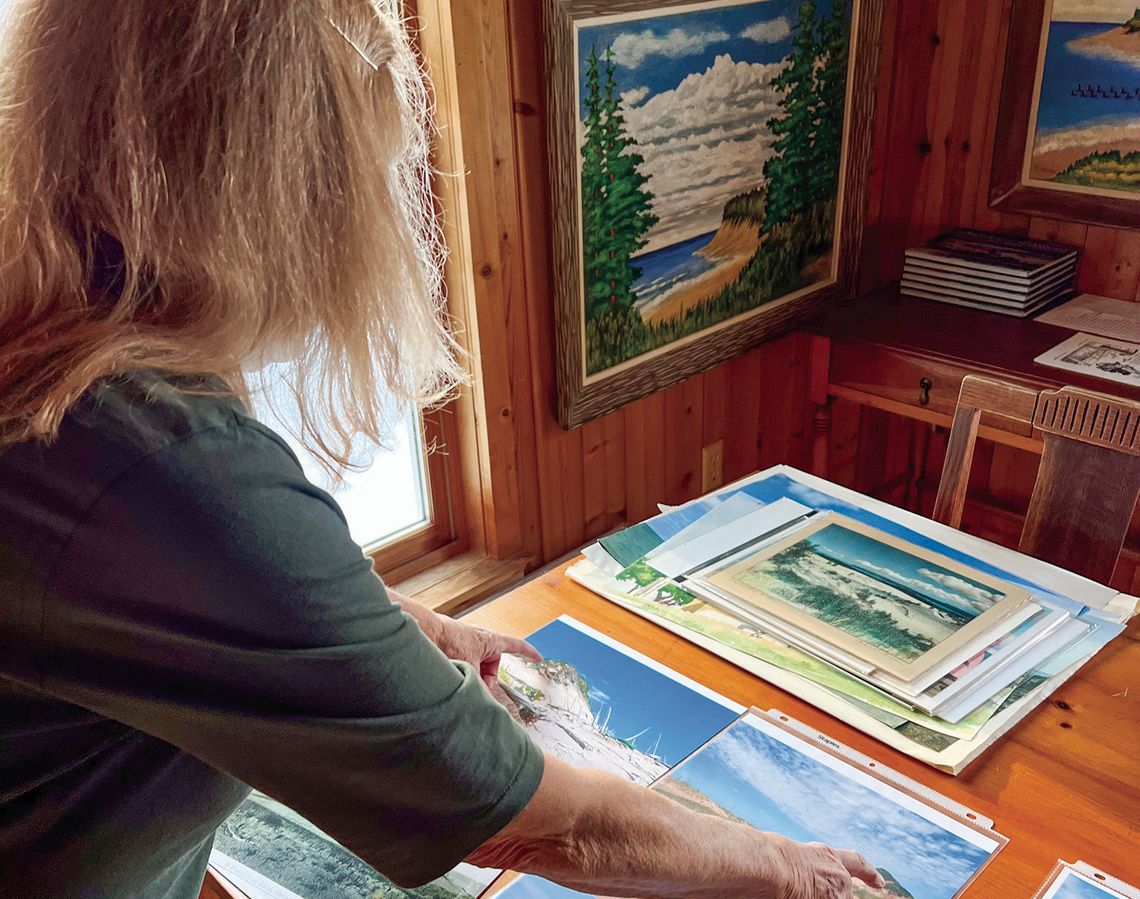
Grace Johnson holds her book, “Frederick W. Dickinson: Sleeping Bear Dunes Pioneer Photographer,” the way one might hold an old family photo album — with consideration and sparkling eyes. Inside are handcolored photos, black and white prints, postcards and drawings, each one a fragment of life in Leelanau County as her parents knew and loved it.
Assembled by Johnson to honor her parents, the book brings together decades of work by her father, Frederick W. Dickinson, alongside her mother’s works, Johnson’s own writing, drawings, and archival selections that highlight the people behind the images.
Dickinson’s photographs have been famous for decades and many people had been requesting a book about Johnson’s parents for years until a close friend finally encouraged her to take the idea seriously. The result functions both as a family album and visual history of Glen Arbor and the surrounding area.
“It’s still a love letter to the people because he loved people and he was photographing people’s favorite places and where they lived,” said Johnson.
Fred Dickinson was a pioneer photographer in documenting Sleeping Bear Dunes and the Leelanau landscape, capturing both its grandeur and the quiet, everyday moments. Working in black and white and hand coloring his prints, he turned simple cameras into tools for creating prints that feel timeless.
“I inherited his eye for photography and his artistic sense,” said Johnson, who admits that she can’t turn off her attention to detail. Her meticulousness shows even when looking at a drawing in the book that she’d done of the Carl Bradley shipwreck as a young girl. She noted that, “I should have drawn the Carl Bradley higher out of the water because it had already unloaded its cargo and would therefore be lighter and sit higher above the water.” For Johnson, these choices are more than technical, they reveal a worldview shaped by honesty and simplicity.
As she flipped through the pages she curated, Johnson noted how specifically she laid out some of the photos. Some pictures compliment each other with similar movement and shapes, while other pages compare shots or drawings of scenes captured by both Johnson and her father.
The book is also a tribute to her mother, who Johnson said deserves recognition alongside her father.
“I really wanted mom in there because she has been overshadowed by my dad,” she said.
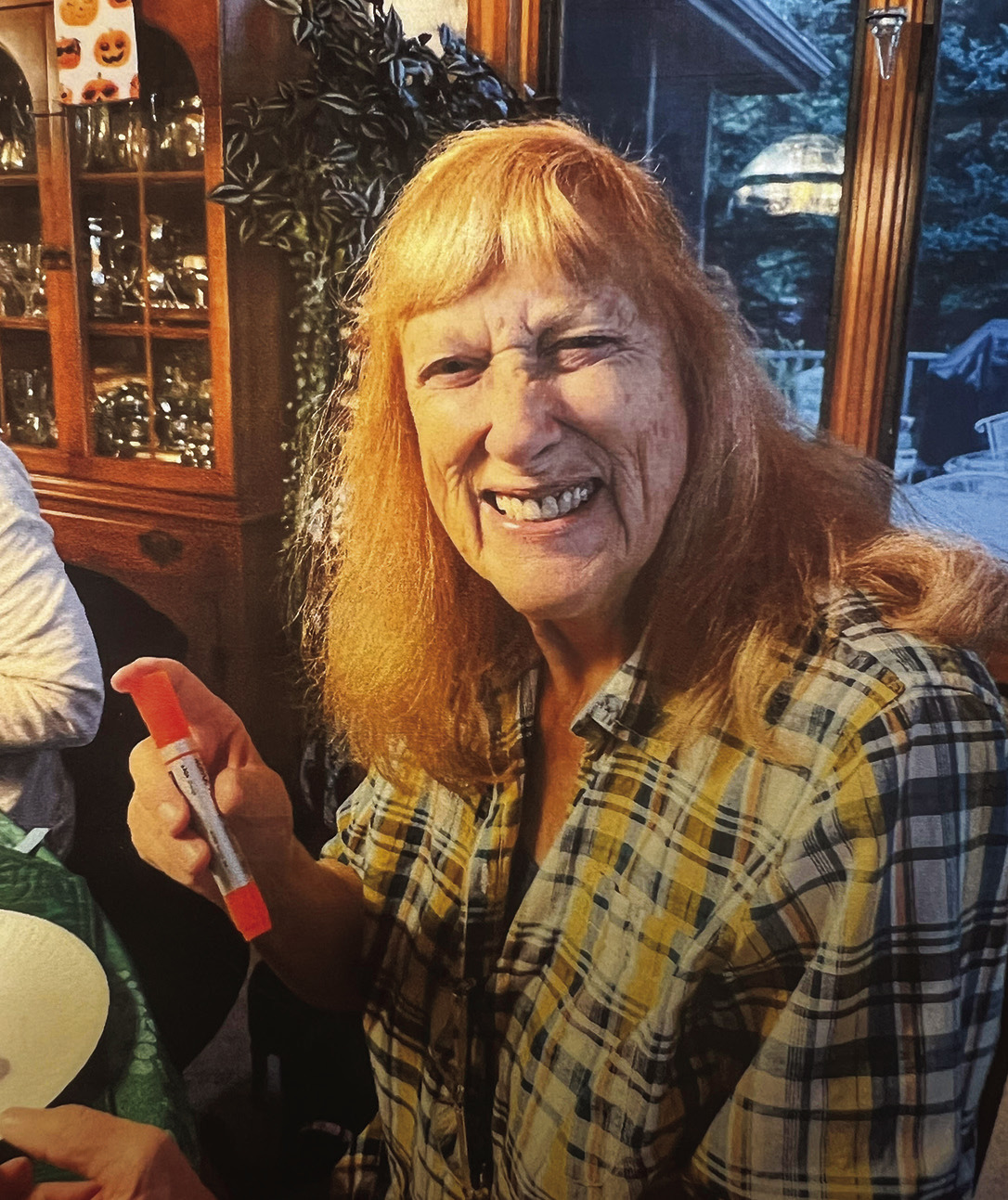
Her mother, Julia Terry Dickinson, was “always moving, very determined and very, very sharp and smart and quick witted and brilliant,” explained Johnson with a twinkle in her eye one can imagine she shared with her mom. Julia had a deep commitment and love for the Girl Scouts, and was always involved with the Glen Lake Women’s Club and school events.
Johnson described her parents’ home life and work together as filled with joy and laughter.
“Everything was laughter,” she said, remembering her parents’ playful interactions and the spirited way in which they lived their lives with moments that were as much about love as they were about art.
“The book captures not just their work, but the way they lived in and loved this place.” Johnson emphasized how her family’s love of the area comes, in part, from their deep love of nature. Nature wasn’t just a backdrop, it was a guiding principle.
“(My dad’s) religion was all out there,” said Johnson gesturing out the window. Her parents’ love for the outdoors shaped everything from their daily routines to their creative work.
Beyond their artistic pursuits, the Dickinsons also owned the Leelanau Enterprise for several years beginning in 1943.
“My mother often said that her first love was printer’s ink,” laughed Johnson. During their time with the paper, Fred made waves by redesigning the masthead into an intricate piece of art featuring illustrations of the area. Julia contributed by writing her popular column the “Leelanau Lookout” and serving as editor, while Fred took photographs and served as publisher. Eventually, the Dickinson’s moved the Enterprise to Glen Arbor, before selling it in 1949 to Karl Detzer who moved it back to Leland.
Through it all, Johnson’s ability to see the world through her father’s eyes guided her through her careful curation of the book. With “Frederick W. Dickinson: Sleeping Bear Dunes Pioneer Photographer.” Johnson not only honors her parent’s legacy but also provides a window to history guided by a partnership rooted in an honest and pure love of where they lived.