The 2026 Northwest Michigan Orchard and Vineyard show brought farmers and researchers together for two days to look back on the year that was and look ahead to the year that is 2026.
Last Tuesday and Wednesday offered a variety of topics on research and information about tart cherries, sweet cherries, apples, and wine grapes, addressing production and marketing.
After one year on the job as president of the Cherry Industry Administrative Board (CIAB), Amy Cohn said the CMI has found its north star with a new strategy framework.
“We identified, not 12, not 20. Three strategic mandates,” Cohn said. “We have actions underneath each of those strategic mandates that we are acting upon and delivering against so that we can improve industry profitability, and that we can drive marketplace awareness, that we can unify the industry.”
The first strategic mandate is to improve industry profitability, starting with the grower; the second strategic mandate is to drive marketplace growth through awareness and in consumption. The third and final is to unify the industry for mutual success.
Cohn said they want to reform the optimal supply formula (OSF) and create a certification mark for Montmorency tart cherries to distinguish them from other cherry varieties.
“We presented the certification mark at an open CIAB board meeting in December. Right now, the team is working through the criteria for blended products to have that certification mark on their packaging,” Cohn said. “We know for single products, including U.S.-grown Montmorency tart cherry juice, it needs to be 100% U.S. grown, Montmorency tart cherry juice, to have the certification markers called true tart on the packaging.”
From disease to water discharge, there are plenty of topics for farmers to expand their knowledge.
Leisa Eckerle, a local cherry farmer and owner of Benjamin Twiggs in Traverse City, favorite part of the event is connecting with other cherry farmers.
“ My favorite part is the networking, and being able to connect with growers, vendors, and catch up on where everybody’s at,” Eckerle said. “We are able to explore and further our discussions, especially with the Michigan Cherry Alliance.”
Eckerle said it’s about making connections because it’s rare to bring most cherry farmers into the same room.
Eckerle and her family sparked interest in the use of technology and pesticides, including drones, among other software.
“It’s a great opportunity ... My son’s on the farm farming, so he gets to hear what’s going on with research and some of those things that my daughter is working with me on the business business, doing marketing and making connections,” she said.
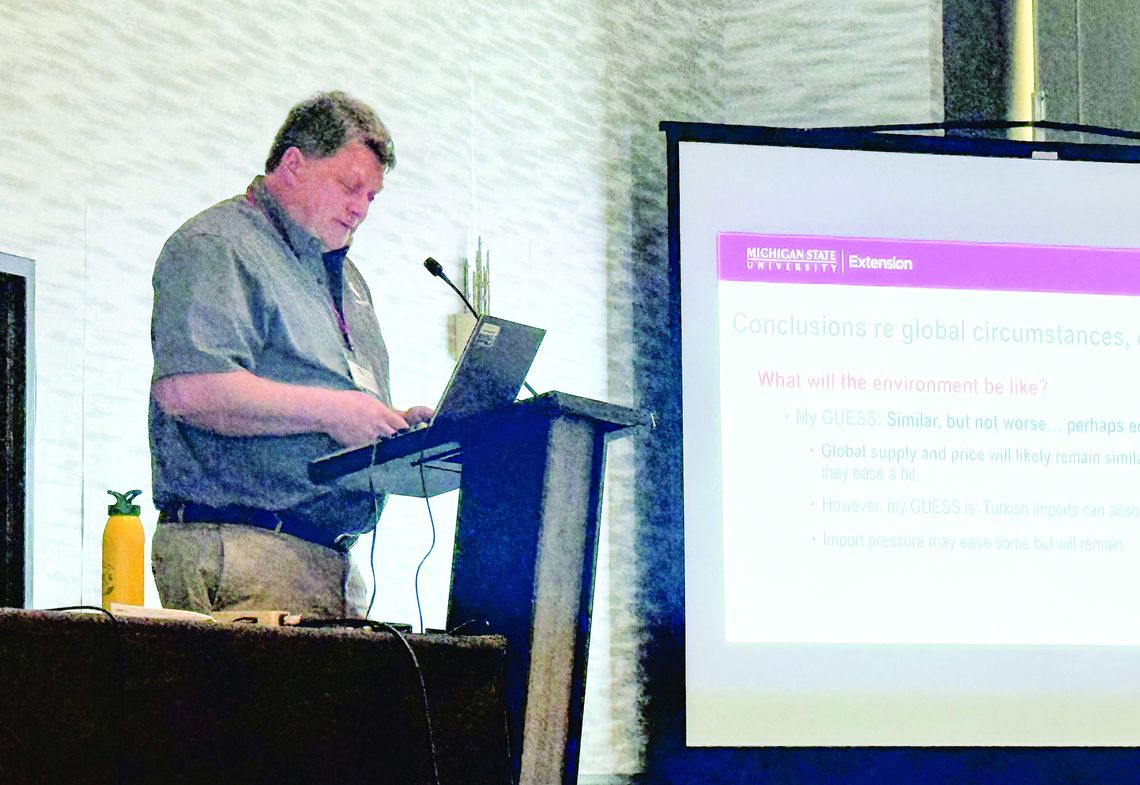
Nikki Rothwell, director of the Michigan State Extension Horticulture Center, enjoyed several presentations throughout both days, including MSU Extension Farm Business Management Educator Chris Bardenhagen, who presented on tart cherry production both domestically and internationally.
“What’s coming out of these certain countries, are they true or not ... Should we plant or should we not? I don’t know. I thought it was really unique, and I thought his perspective of the market was helpful ... There were some niche marketing sessions, talking about how we could get into maybe some international markets with our Montmorency cherries because that’s all we grow,” Rothwell said. “What we are really thinking about is how we are going to farm fruit in the future.”
Every year, more and more technology is showcased at the local conference, including versions of artificial intelligence and cameras that can be fitted on old spraying equipment for better precision. Also featured is the ever-growing use of drones for spraying, surveying, and more.
“There’s some technology out there that I think we are ready to jump on, and it’s not that far away ... It feels good to be relevant and making sure that we’re addressing some of those questions that growers might have,” Rothwell said.