Northport Public School seventh grade science students made their first appearance at the Engineering Society of Detroit’s (ESD) regional Future City Competition on Jan. 20 in Novi — and came back to the district with awards in-hand and inspiration to compete again next year.
Out of 35 teams represented at the event, Northport school took home three awards, one of which was earning fifth place overall, as well as the “Rookie Team of the Year” and "Best Use of Green Principles” awards.
Students in the competition were tasked with researching, designing, and building a full-scale model futuristic city that eliminates food waste by creating innovative, sustainable systems for food consumption and production. The task allowed youth to explore how engineering can transform the way cities grow, distribute, and consume food as the “real world challenge” is intended to spark creativity, critical thinking, and collaboration. Participants had to complete four deliverables including: A 1,500 city essay; a scaled model made from recycled materials; a 15 minute presentation and question and answer session with judges; and a project plan.
Northport School Science Teacher Dr. Susan Sobehrad said the group of seventh graders she had in her class this year were eager to get started on the sustainable systems project, something they’ve been working on since the beginning of the school year. She first came across the Future City Competition three years ago when she began teaching science classes, noting how the project tasks would be a great way to tie in what students are learning in class using real world applications.
“Because their subject matter in seventh grade is life science and because the primary objective of this project was to create less food waste, a lot of the things they were looking at tied into our curriculum… Again, it’s also the demeanor of the class and I’m so proud of them, they just took it and ran with it,” Sobehrad said. “The goal was the same for all projects — to create a city that pays attention to infrastructure, that pays attention to sustainability, that pays attention to reducing food waste through regenerative agriculture and a circular economy.”
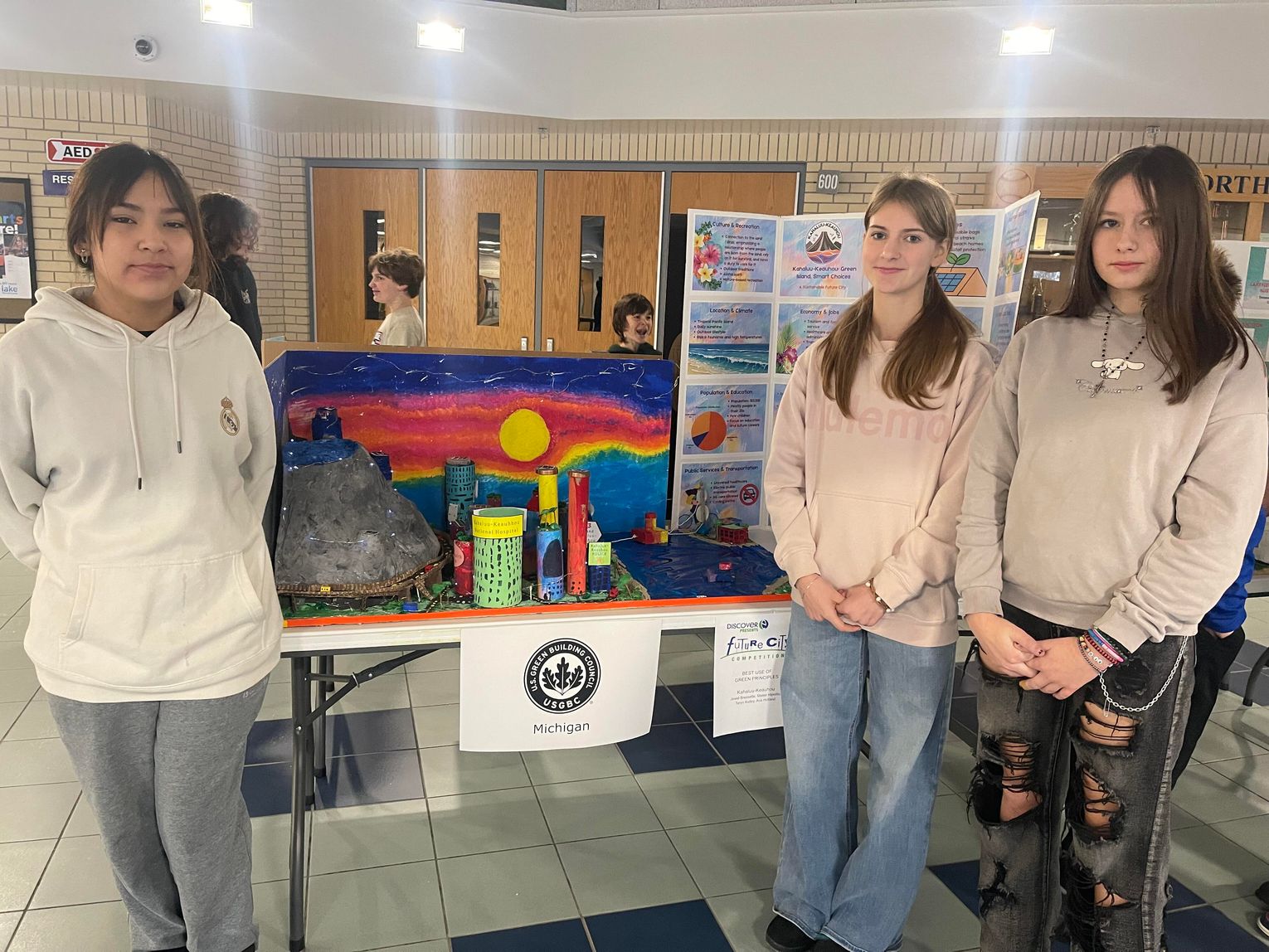
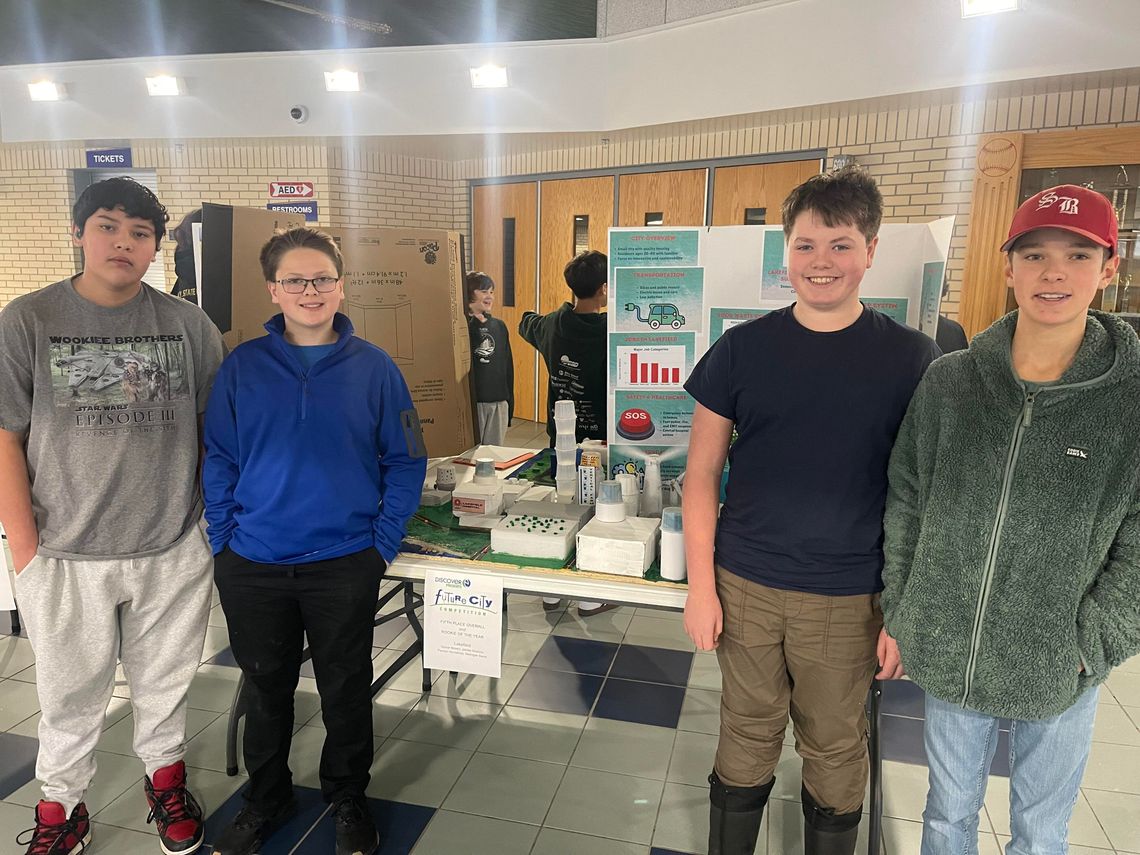
Students in Sobehrad’s class created four teams to enter into the competition, all of which came up with their own unique names and sustainable city models: Lakefield, which took home fifth place overall and rookie of the year awards, was made up of students Tanner Brown, James Hoskins, Pierson Humphrey, and Maiingan Sams. Kahaluu-Keauhou, a team that earned an award for “best use of principles,” consisted of Jewel Bressette, Mateo Hipolito, Taryn Kelley, and Ava Holland; Green City was created by Aadehwin Agosa, Brishom Dignan, Charlie Hale, and Justin Miller; and Tellosania was created by Joe Mendez, Marcus Myers, and Romeo Roman.
Each individual team had to complete several components for the project and included everything from conducting basic research as a class to individual teams doing their own in-depth research on solutions to food waste for their particular cities. After teams completed their own papers with citations, they had to bring to life their ideas via the city models built and prepare to present and explain their work to judges at the event.
“I was so proud of them, every single kid gave it their all,” Sobehrad said. “The judging teams consisted of eight adult experts who came to talk to them… It was a big deal, I don’t think any of these kids have ever really had to present like that. I can see why it would be intimidating, but our kids weren't, they stepped up and they were great. In addition to the eight judges, there were a whole bunch of other judges because they had a lot of special awards. I would say each team had to meet with 20-30 adult experts talking about their project during a two hour judging period. It was phenomenal and our kids were amazing.”
Lakefield team member Pierson Humphrey said he learned the importance of understanding food waste in society, adding that he and his teammates kept sustainability and smart systems in mind throughout the process. The city model team Lakefield presented incorporated ideas like vertical farming and a “lazy composter system,” where food waste would enter compost bins and be transported via an air-pressure tube.
“The lazy composter, which is kind of a compost bin inside everyone's house — you pretty much drop your food in, or because of the algae plastics, you can drop the plastics in as well. Then it gets sent to a worm plant under the farm, and then it goes into the farm as fertile dirt to fertilize the plants,” said Lakefield team member James Hoskins.
“We didn’t want to have to import a lot, but we did want to export though to make money because cities need money,” said Humphrey. “We wanted to be sustainable and we wanted to be self-sufficient.”
Kahaluu-Keahou team member Taryn Kelley said they wanted to create a sustainable city model based in Hawaii because of the biodiversity and natural resources present in the islands, noting the access to water, nature itself, and regional warm temperatures. The team’s city would highlight green practices such as building gardens, composting and recycling, and utilizing biodegradable products and reusable bags.
“I’ve never actually heard a lot about cities in Hawaii, so we wanted to see more cities in the future on an island in the Pacific or Atlantic,” Kelley said. “When we were building, we wanted to have nature be a part of the city because nature is in/part of our world, it's a key important part of our life. If we build a city and we ignore nature, it's not going to be sustainable because nature is how we’ve evolved, so we’re going to have to keep that with us. So we always knew we wanted a natural way to farm, trees, and greenery all around and on top of buildings.”
Sobehrad confirmed that students are just as enthusiastic about participating in the competition again next year, adding that kids from other classes have also shown great interest.
“This is a state of Michigan regional competition, but then the top project goes to nationals, so the fact that we got fifth place this year, I think we’re looking at heading toward the top there in the next year,” Sobehrad said. “It was a great event for the kids.”