Cities share names with fish
Can you name a city in the Great Lakes region that shares its name with a fish?
OK, that was fairly easy. Grayling and Menominee come to mind in Michigan. And then there’s Sturgeon Bay, Wisconsin.
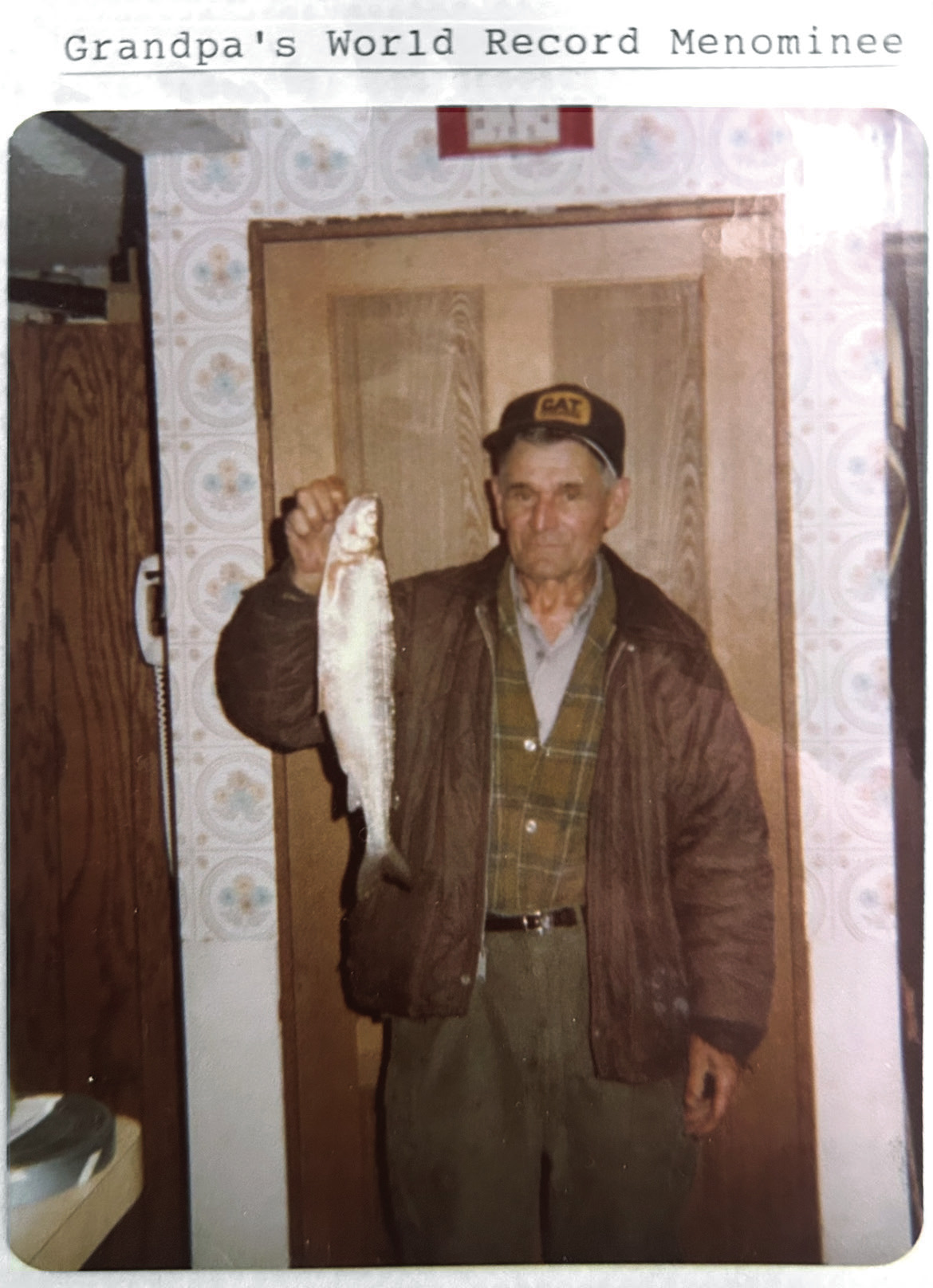
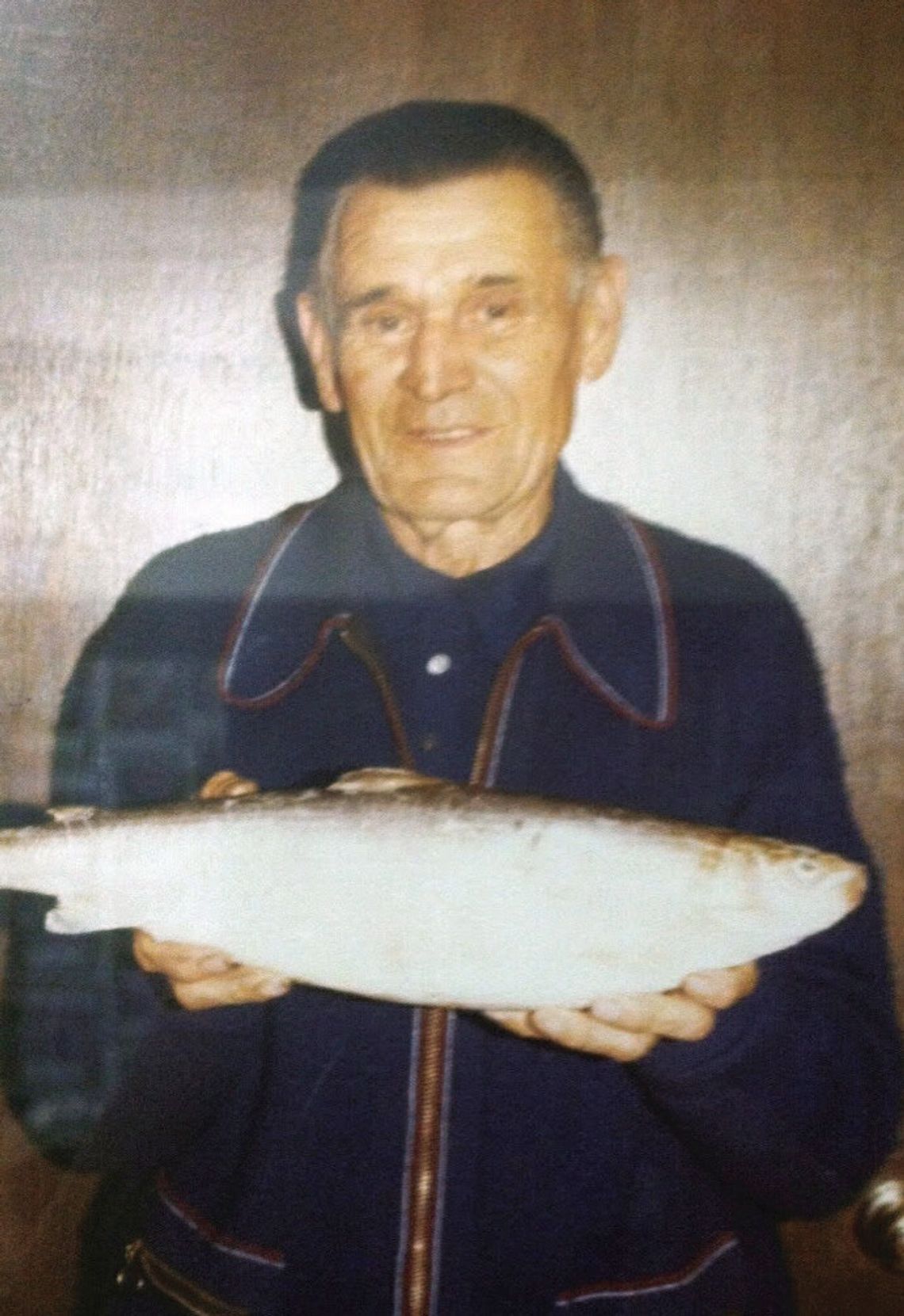
But which town is the namesake of a fish landed by a nowdeceased Lake Leelanau resident that still stands as a world record?
That answer would be Menominee, the name of a city and county in the Upper Peninsula, an Indian tribe located primarily in Wisconsin known as the Wild Rice People, and a rather dull-looking species of whitefish that Vernon A. Bauer caught off the Leland pier on Nov. 2, 1977.
Menominee fish enthusiasts, please pardon the mundane description. In all honesty, there aren’t many of you left to complain. And you are pursuing a rather diminutive sport that’s been nicknamed the cod of the Great Lakes.
But there was a day when hardy anglers gathered along the Leland pier not to haul in 20-pound salmon or 10-pound steelhead. It was to catch a bucket of Menominee, the smaller and lesser known of two whitefish species in the Great Lakes.
Captain Bill Winowiecki, owner of Watta Bite Charter Fishing and past president of the Michigan Charter Boat Association, was growing up when Menominee fishing was still in its heyday. That was before invasive zebra and quagga mussels carpeted the bottom of the shallows of Lake Michigan, gobbling up zooplankton and small insects that are mainstays of Menominee diets.
“I skipped a day of school and watched Carl Oleson catch them. The salmon were in, and so were the Menominee. They weren’t biting fast and furious. But you know Carl Oleson, he didn’t need it to be fast and furious. He just needed them to be there to keep him busy and trying,” Winowiecki recalled. Oleson, whose name appears on the M-22 bridge spanning the Glen Lake Narrows, was fishing at the mouth of the Crystal River.
Winowiecki, who shares Oleson’s trait of being happiest with a fishing pole in hand, also caught his share of Menominee as a young man plying the West Grand Traverse Bay waters near Bowers Harbor. “We’d catch whitefish, perch, cisco, Menominee. I haven’t done it for years. I fished it when I worked for Cone Drive and got laid off. It gets deep in that hole so fast,” he recalled.
There are few discussions of Menominee fishing in northwest Michigan on the internet, although up until about five years ago there was mention of interest on piers farther south including Frankfort. That lack of zest for Menominee didn’t surprise MDNR fisheries biologist Heather Hettinger, who said Leelanau lacks the pier fishing opportunities of other shoreline counties.
Two other factors are reducing interest in Menominee fishing throughout Lake Michigan: their dwindling numbers, and competition in angler interest provided by lake trout, salmon and steelhead, she said.
“There are definitely Menominee around. Are there as many as during the 70s and 80s? No,” she said.
Hettinger may be a fish biologist by trade, but she’s more than a lab rat.
She related that the Great Lakes offer up two species of whitefish, with white whitefish being the larger (typically 5-6 pounds) and the more popular table fare on restaurant menus. Menominee are also known as round whitefish . The populations of both have been greatly diminished.
“There are two ways to tell them apart. Menominee typically go two-to-three pounds. And if you look, they only have one flap of skin between their nostrils. Whitefish have two flaps,” she said.
Then Hettinger moved into fishing mode.
“Most are caught in the fall using spawn eggs meant for lake trout. They’ll rip up your spawn sack but you’ll never catch them. The last time I went was about 10 years ago, and we caught a mess. Three of us fished and we caught about a half a dozen,” she said.
That was in Frankfort, and they had little competition on the pier. When fishing pressure was abundant after the lake trout population plummeted due to over harvest and sea lamprey— mainly in the 1940s and 50s — Menominee and perch were the kings of Great Lake fishing. Round whitefish hang out in relatively shallow water all year, and move close to the shoreline in spring and summer.
Vern Bauer’s son, who carries the same name as his father, resides in Bingham Township. The family has the original mount of the Menominee that in recent years was touched up by Leland Township taxidermist Mark Steimel.
The record-holding Vern Bauer died in 1992. The younger Vern Bauer grew up in a house by a lumberyard northeast of the M-204 bridge in Lake Leelanau, where his father worked. The family also operated a mink farm on the land.
“I wasn’t fishing with him that day. He use to fish off the end of the pier in Leland where the boats come in. At the end of that pier there was 10-12 feet of water, maybe more. It’s silted in since then,” Bauer said.
He continued, “Menominee came in at mating time. I don’t even know if people watch for them any more. We’d use a single egg about a foot above a weight to get to the bottom. If they grabbed it you could feel them right away. They had a sensitive mouth so you couldn’t rip the line up or you’d pull it out.”
The mount comes with a tag that says: “Whitefish, round — 3 pounds, 4 ounces, caught by Vernon A. Bauer, Lake Leelanau, North WestLower Michigan (sic) …” The catch is still listed as a record for Menominee by the International Game Fish Association (IGFA). The Michigan record listed on the MDNR website, which apparently was not submitted to the IGFA, is a 4.6 pound, 21.5 inch “Menominee whitefish” also caught on a salmon egg in Lake Michigan. That was in Ottawa County in 1992.
“I was out there at the hall of fame (in Florida) a couple years ago. They still have (his dad’s) picture on the wall,” Bauer said.
It’s somewhat of a miracle that the record continues — or that Bauer entered and mounted the delicacy instead of having it for dinner. “They were great. We use to eat them fresh just like whitefish. My dad had a great recipe to pickle them, too. And they weren’t oily, so when we smoked them we tried to keep them moist by basting them,” Bauer recalled.
Perhaps Menominee will make a comeback — or maybe they remain off the shoreline of Leelanau in fishable numbers, living without angling pressure.
“In Leelanau, we don’t have much for fishing structure such as piers,” Hettinger said. “Something may have changed so they don’t come into Leland, so you would think they were gone. It’s highly possible that their habits have changed, and if you went out there you might find them. We really don’t have a small boat fishery any more.”