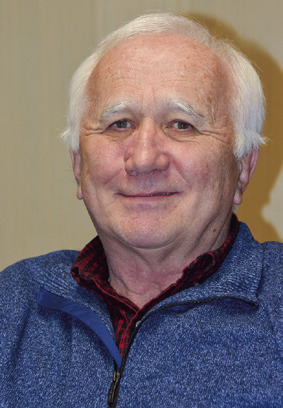
There will be a new person in the drain commissioners seat after action Tuesday by an ad hoc group comprised of the county clerk, prosecutor and judge.
And it’s someone not unfamiliar to many in the county.
Former county administrator and Cedar native Chet Janik was appointed to fill the five or six months remaining in the unexpired term of Tim O’Non, who submitted his resignation earlier this month. His last day on the job is Friday, March 27.
Janik was one of two candidates interviewed for the position by a panel of county Clerk Michelle Crocker, county Prosecutor Joseph Hubbell and Family Court Judge, the Honorable Steven Paciorka. The other candidate interviewed was Timothy Lodge.
Janik will be stepping into the elected drain commissioner’s seat with several projects up in the air.
The resignation came after O’Non and Brian Cenci of GEI Consultants attended a Feb. 17 meeting where residents and commissioners expressed concern about a lack of communications between the drain commissioner and affected property owners.
The duo went over work completed on the Lake Bluff Drain in Solon Township and another drain installed on South Bar Lake. Four additional projects, in varying stages of development, were also outlined.
These include what’s known as Elmwood Township #1 drain; the Timberlee Drain, straddling Solon and Elmwood townships; the Little Glen Lake Drain and the Schomberg Drain proposed along M-22 south of M-204.
Michigan drain law sets out the processes used to create structures to improve the flow of water. For years, there was little need to create drainage district locally. H o w e v e r , more concentrated development has taken place t h roughout the peninsula creating the need to drain. The first step is to identify a drainage issue that affects public health, convenience or welfare. This must be signed by at least 10 (property owners) in the township, at least five of whom must own land that will be directly affected by the proposed drain. Once this is done, the county will hire an engineer to survey the area, determine the boundaries of the watershed, and confirm the project is practical.
After the boundaries are defined, an official petition to locate, establish and construct the drain is filed by the drain commissioner. A Board of Determination holds a public hearing to determine if the project is necessary for public health, safety, or welfare. Cost of the project is then split by the agencies/governmental units involved and affected property owners.
The Schomberg Drain has been in the works since April 23, 2019, well before O’Non was elected.
The remainder of the unexpired term will be filled in the November election, Clerk Michelle Crocker said.