While trilliums, Dutchman’s breeches and jack-in-the-pulpits will soon command a relatively brief center stage appearance in Leelanau’s wild places, there’s a much rarer and lasting bloom that will take but a short walk to admire.
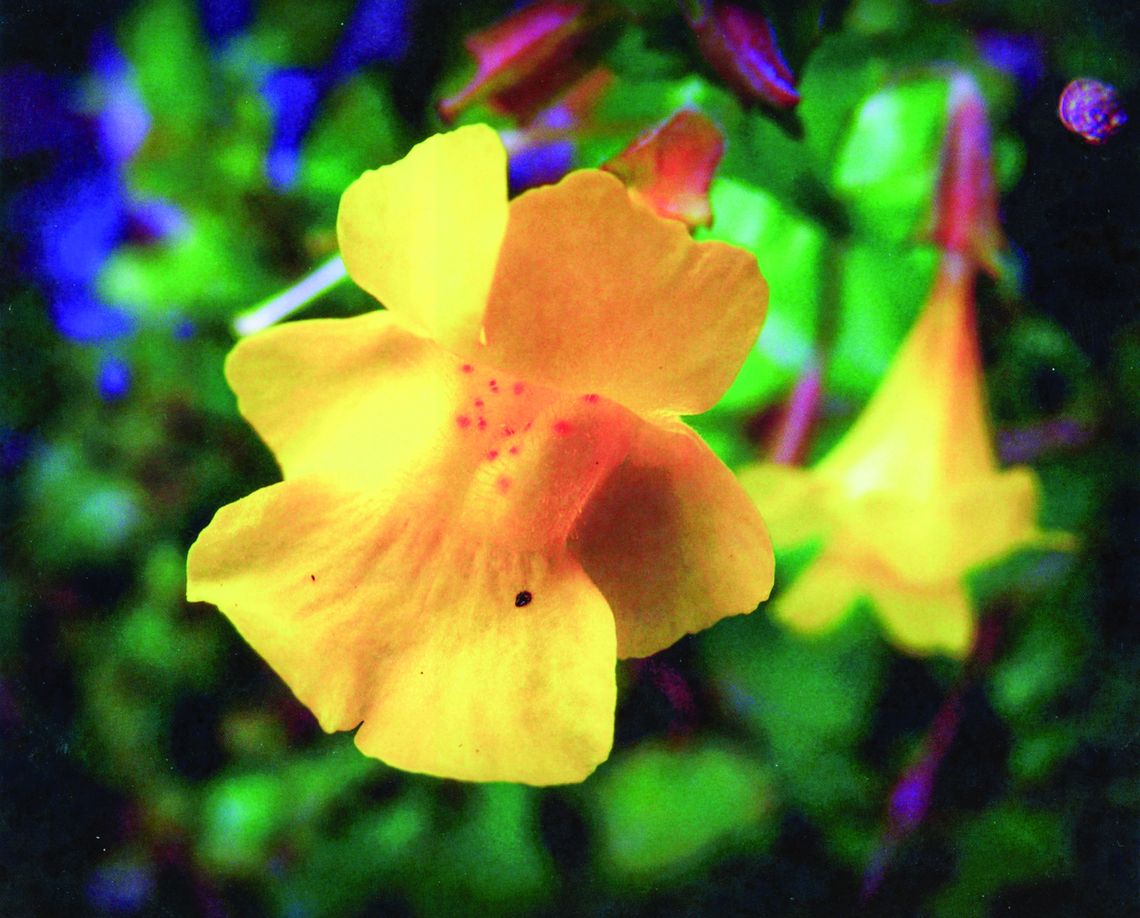
It’s the flowering performance of the Michigan monkey flower, which is described as being the state’s “(arguably) coolest flower” in a 2025 Leelanau Conservancy publication.
That report was protective in terms of providing the exact locations of flower bunches being monitored in the Hatlem Creek watershed, which is understandable. The U.S. Fish and Wildlife Service website states that only 23 Michigan monkey flower colonies have been identified, with all of them located in the northwestern corner of the Lower Peninsula. It’s the only plant species endemic only to Michigan.
Luckily in terms of promoting the plant, one of those locations is publicly known and a point of pride for the Leelanau County park system. It’s found behind the chapel at Old Settlers Park along the shoreline of big Glen Lake.
Thanks to hands-on and vigilante care provided by neighbors, county park personnel and two professionals hired to help them thrive, it’s one Michigan monkey flower colony that grows every year.
Empire resident Laurel Voran, who’s been providing that tender loving flower care since 2012, credits a nature-conscience county for the prolific growth of Old Settlers monkey flowers. The cost in 2026 to weed out competing vegetation, be on the lookout for bugs and deer trampling, and transplant flowers to expand the colony will come to $3,360. The largest share will be borne by the Leelanau County Parks and Recreation Commission ($1,300), with neighbors contributing $1,060. The Glen Lake Association and Voran’s company, Laurel Voran, LLC, will each kick in $500.
The parks commission heard a monkey flower presentation and approved the allocation at its April 15 meeting.
“This is a unique situation,” Voran said of having four sources for monkey flower funding. “I’ve not heard of a situation like it.”
The more things change the more they stay the same. Voran within the last week sold her company to Silver Leaf Landcare, LLC, which is owned by Ella Stafford. She has been working at Old Settler’s Park alongside Voran for the past several years.
Their job is gardening with a purpose with a sideline gig of endangered plant interpretation. Leelanau County has built a viewing platform on high ground between the chapel and monkey flower patch, and installed an interpretive sign that explains the extraordinary plantlife view before visitors.
“They are absolutely gorgeous,” Stafford said.
If you’re looking to be awed this spring, however, try taking a hike in the woods. Those three wildflowers mentioned earlier each bloom over two-to-three weeks from very late April into May.
Here’s where the monkey flower holds the advantage. Its bright yellow, snap-dragon-like blooms begin in late-June and during some years hang around into August — a summertime bonus for residents and visitors alike.
Why at Old Settlers Park? Perfect habitat.
It’s impossible to say when the Michigan monkey flower first grew in that location. It was discovered in 2006 by Jody Marquis, who brought the small patch to the attention of the county parks commission. She continued to watched over and nurture it.
The site perfectly matches the monkey flower’s requirements. It grows in slightly alkaline soil that’s cooled by active springs, also called seeps. In more exacting terms, Voran relates that a pH level of 7.66-8.21 is required, along with temperatures of 47-62 degrees. Lots of sunshine is needed, too.
Hit those environmental factors, then enjoy. The monkey flower will thrive. And nearby seeps offer opportunities to continuing to expand the colony.
“They just need a clear, open space and not to be thwarted by other vegetation. Because it’s so short, it can easily be overrun.
“But it’s a thriving plant in the right situation,” Voran said.