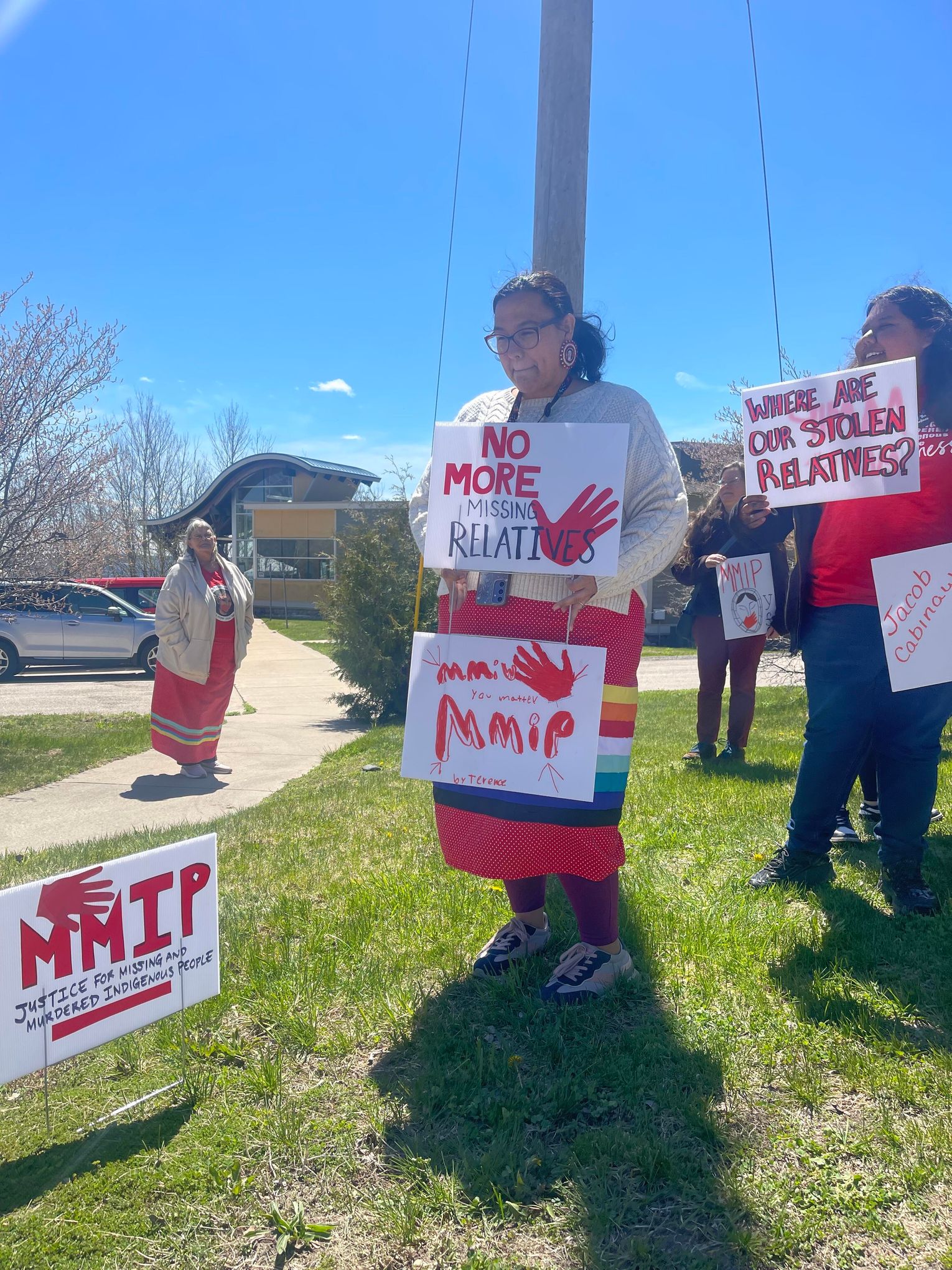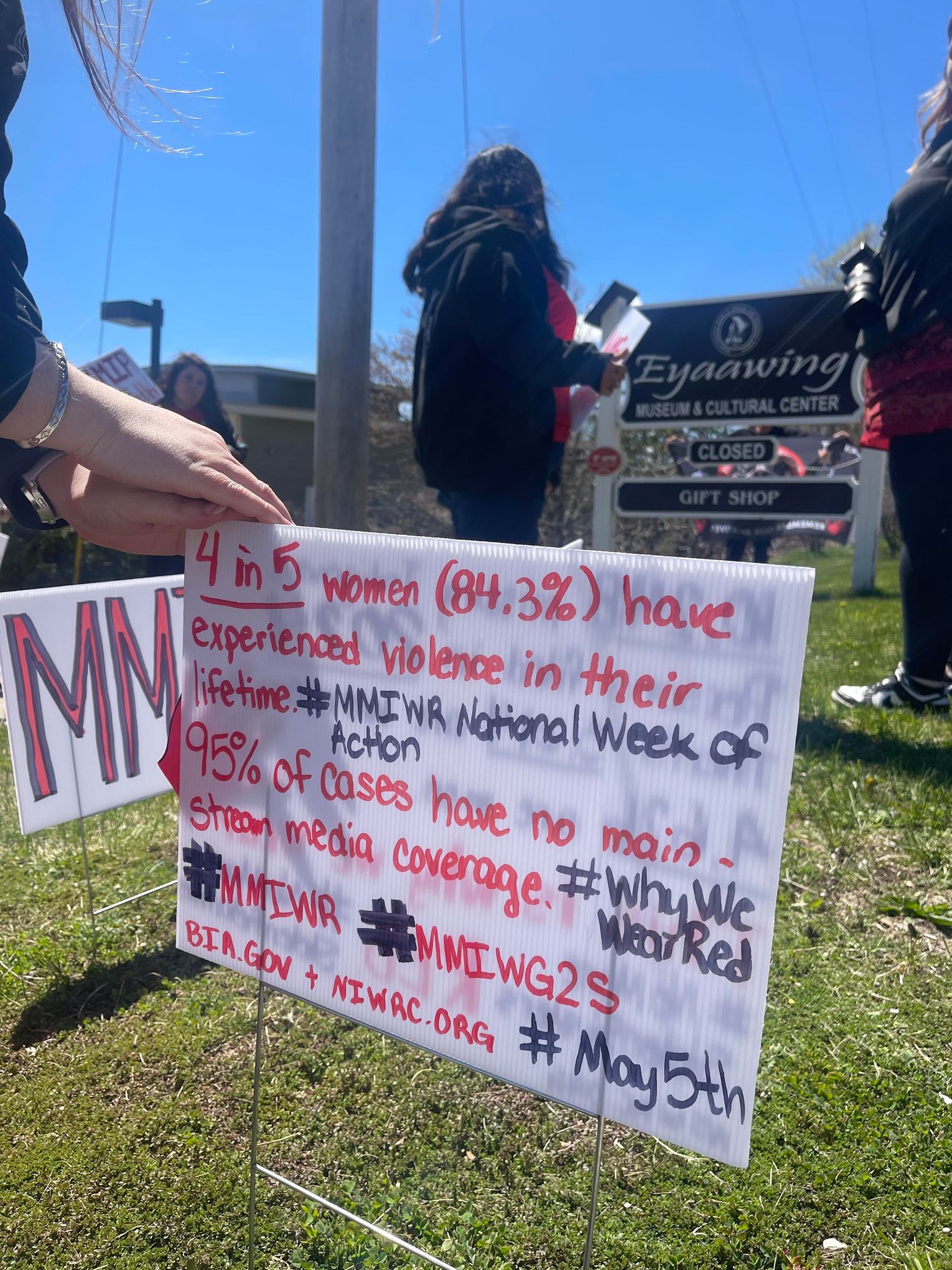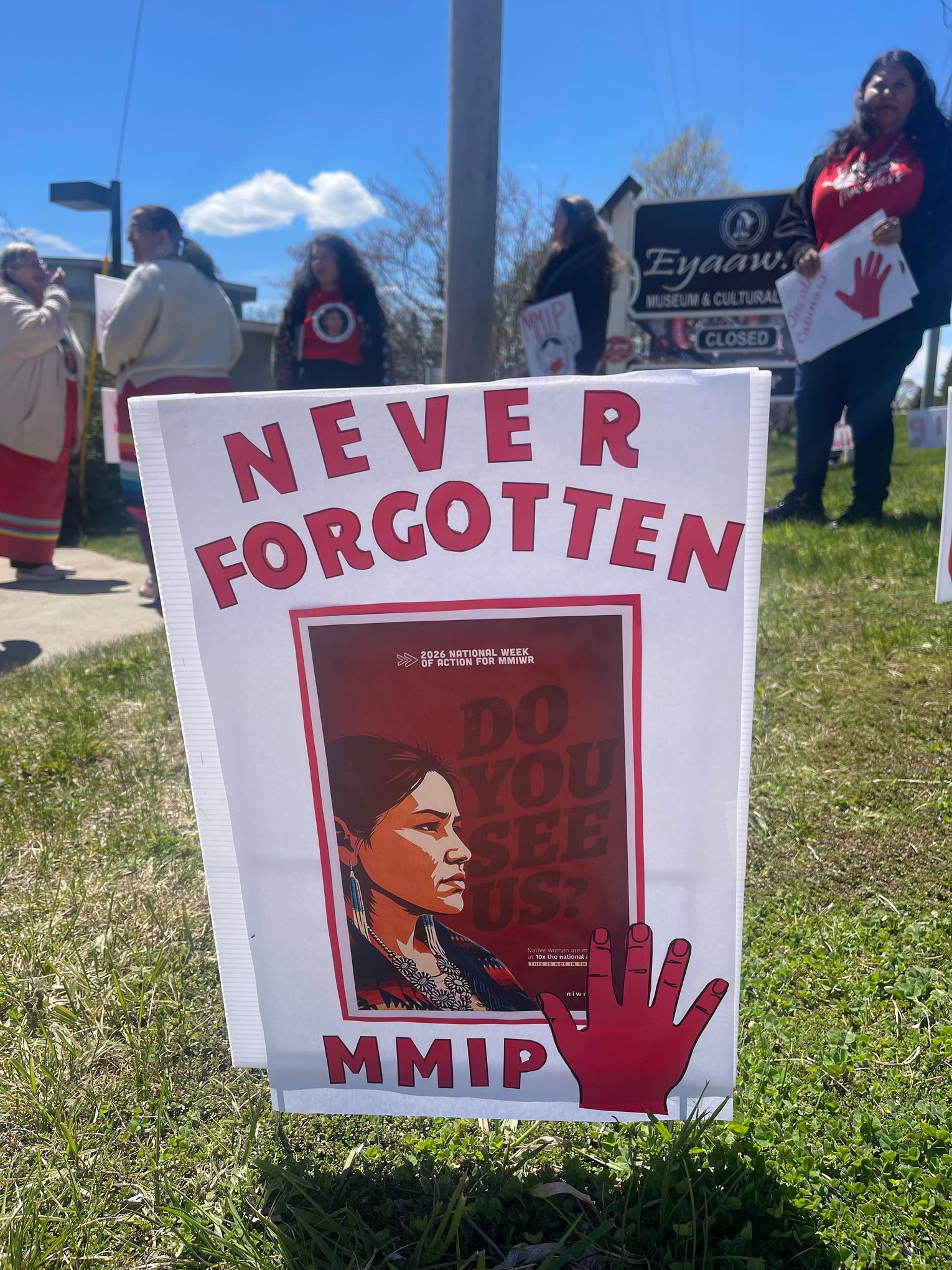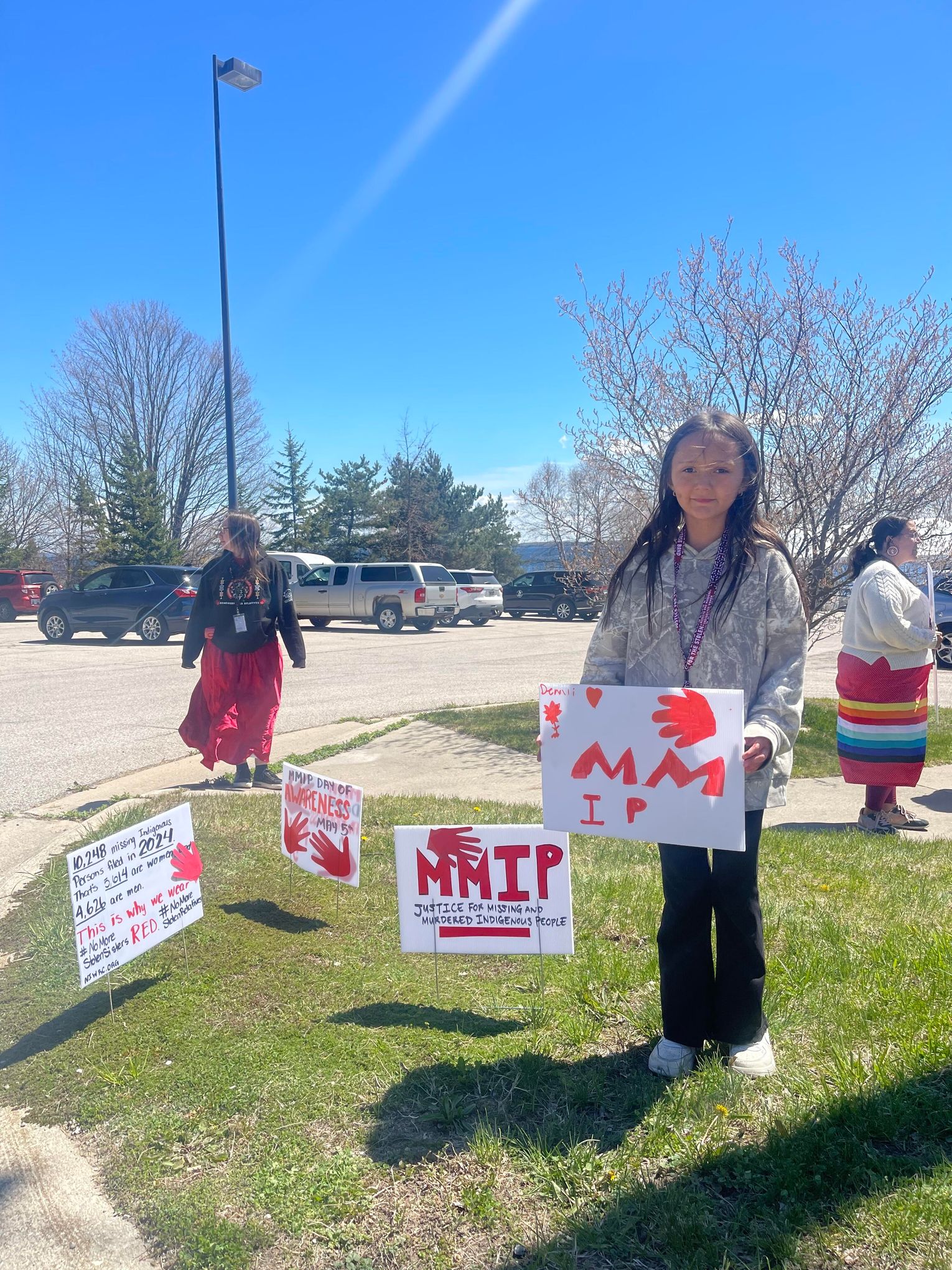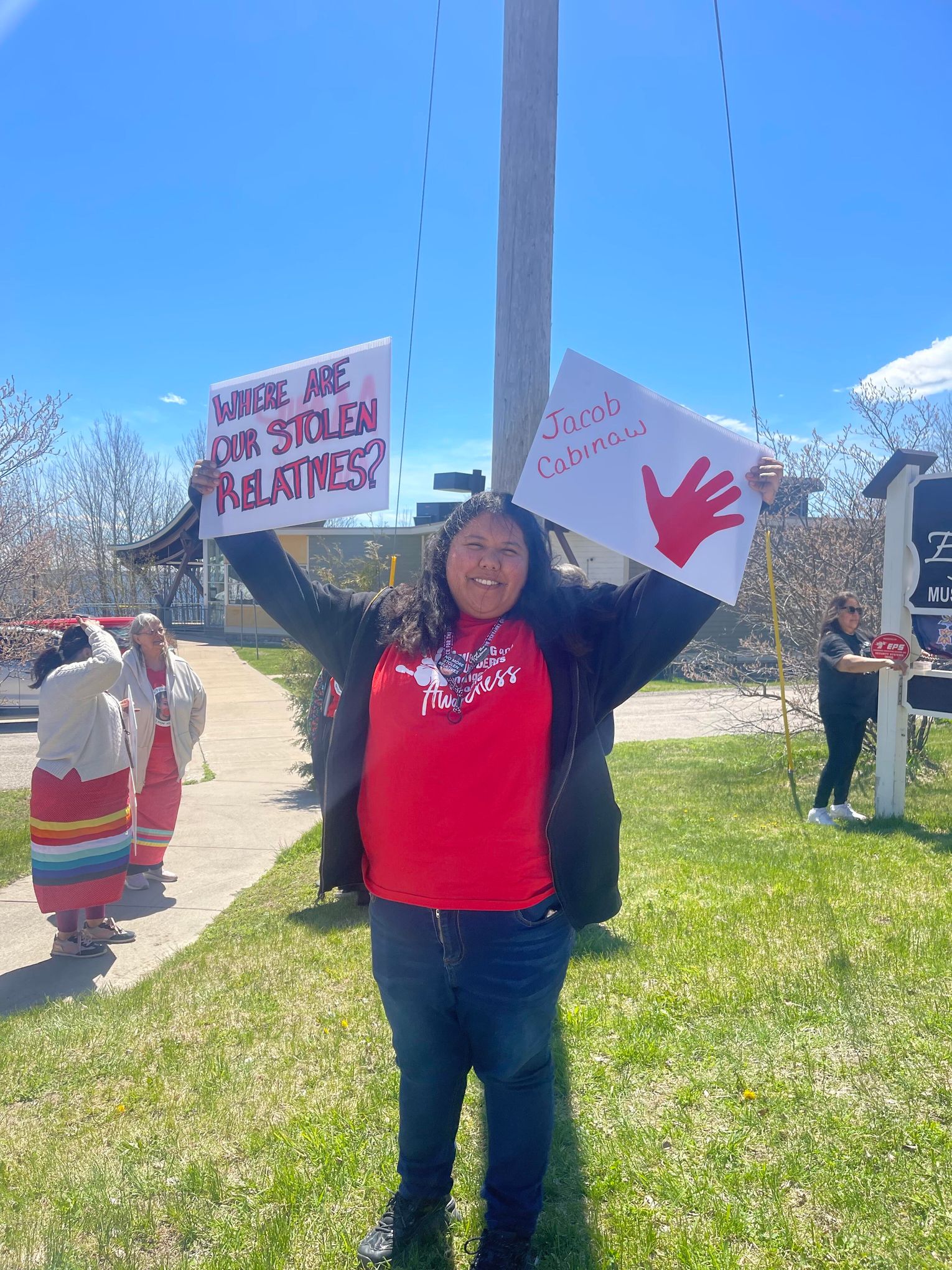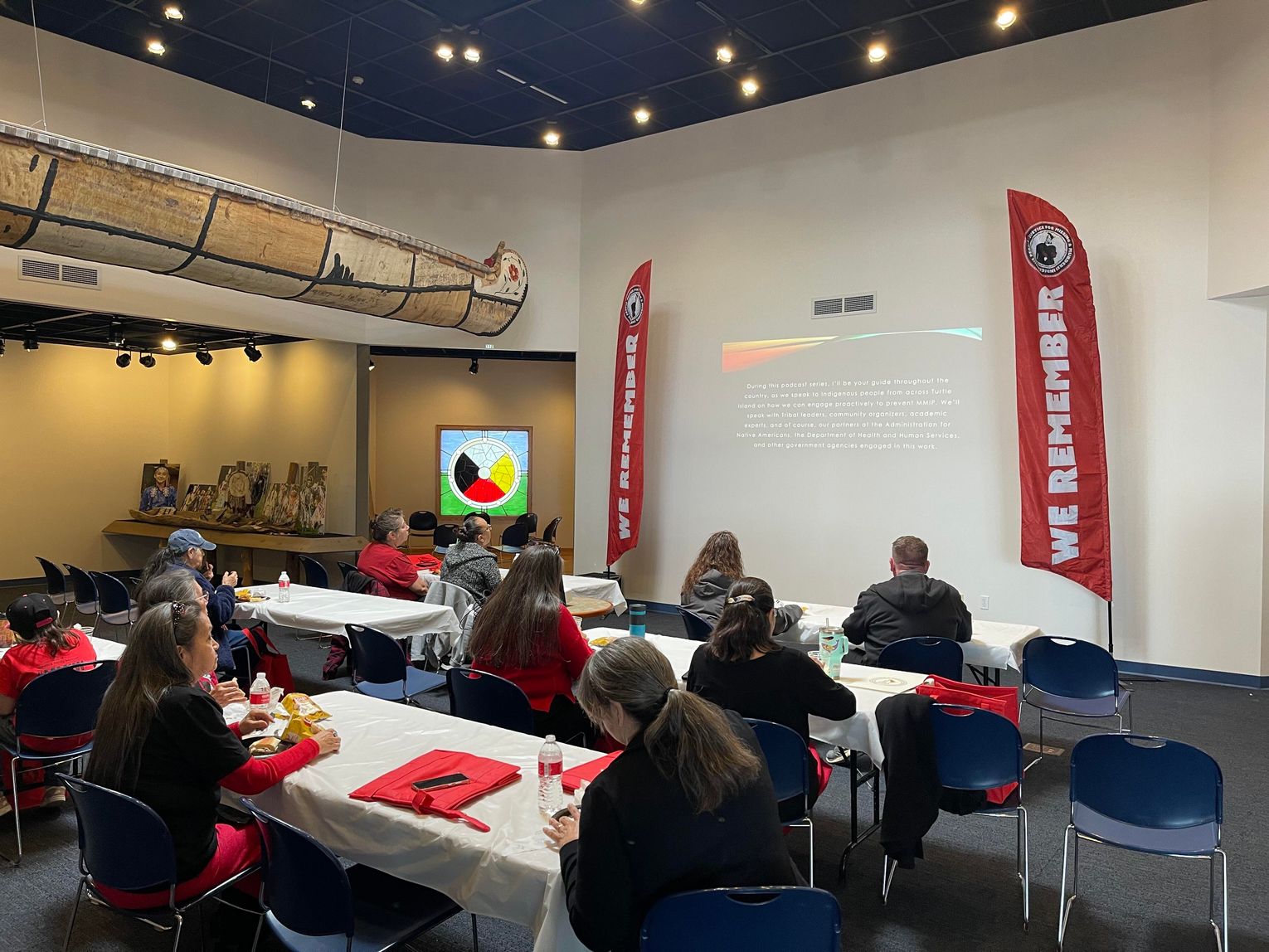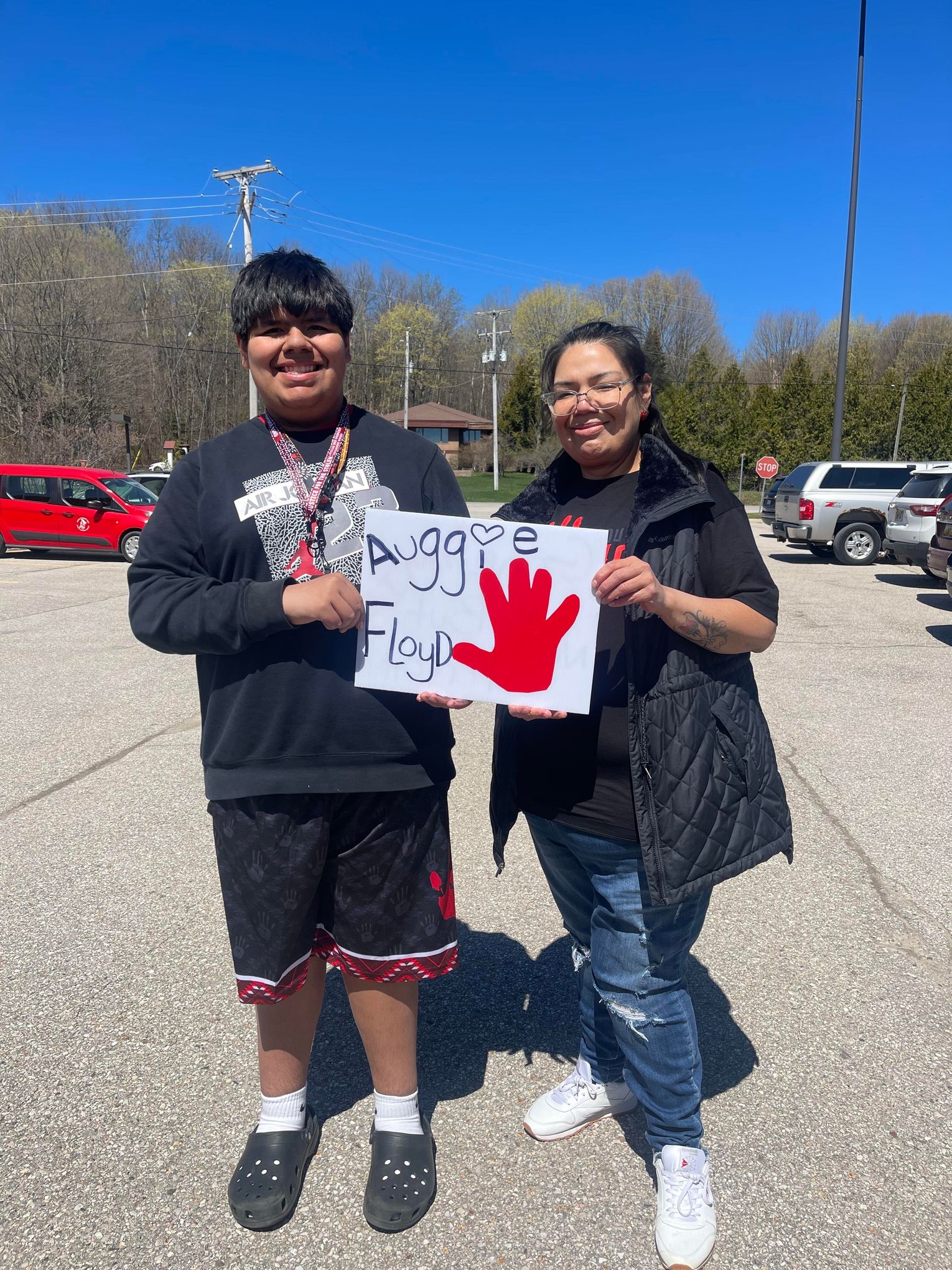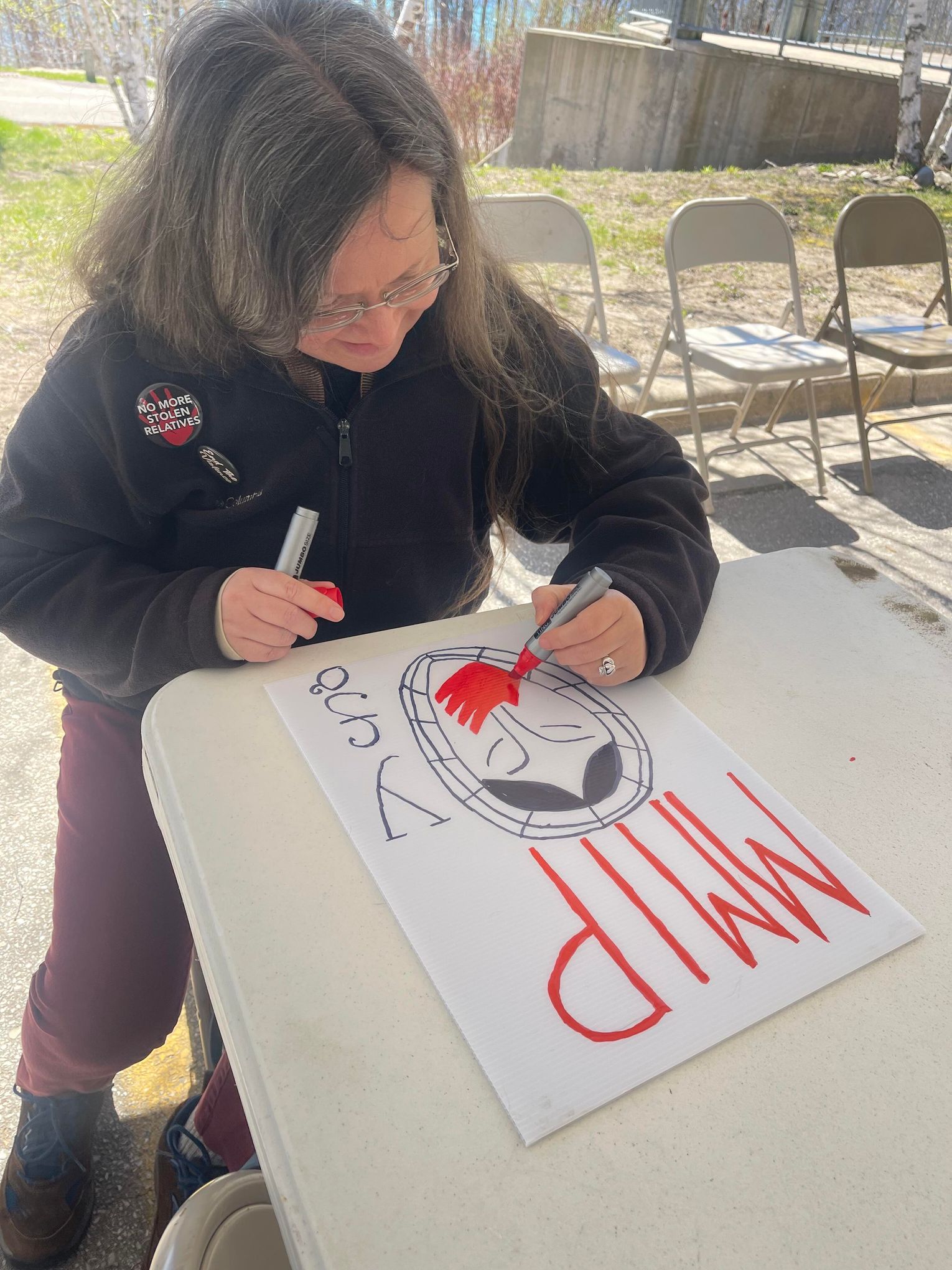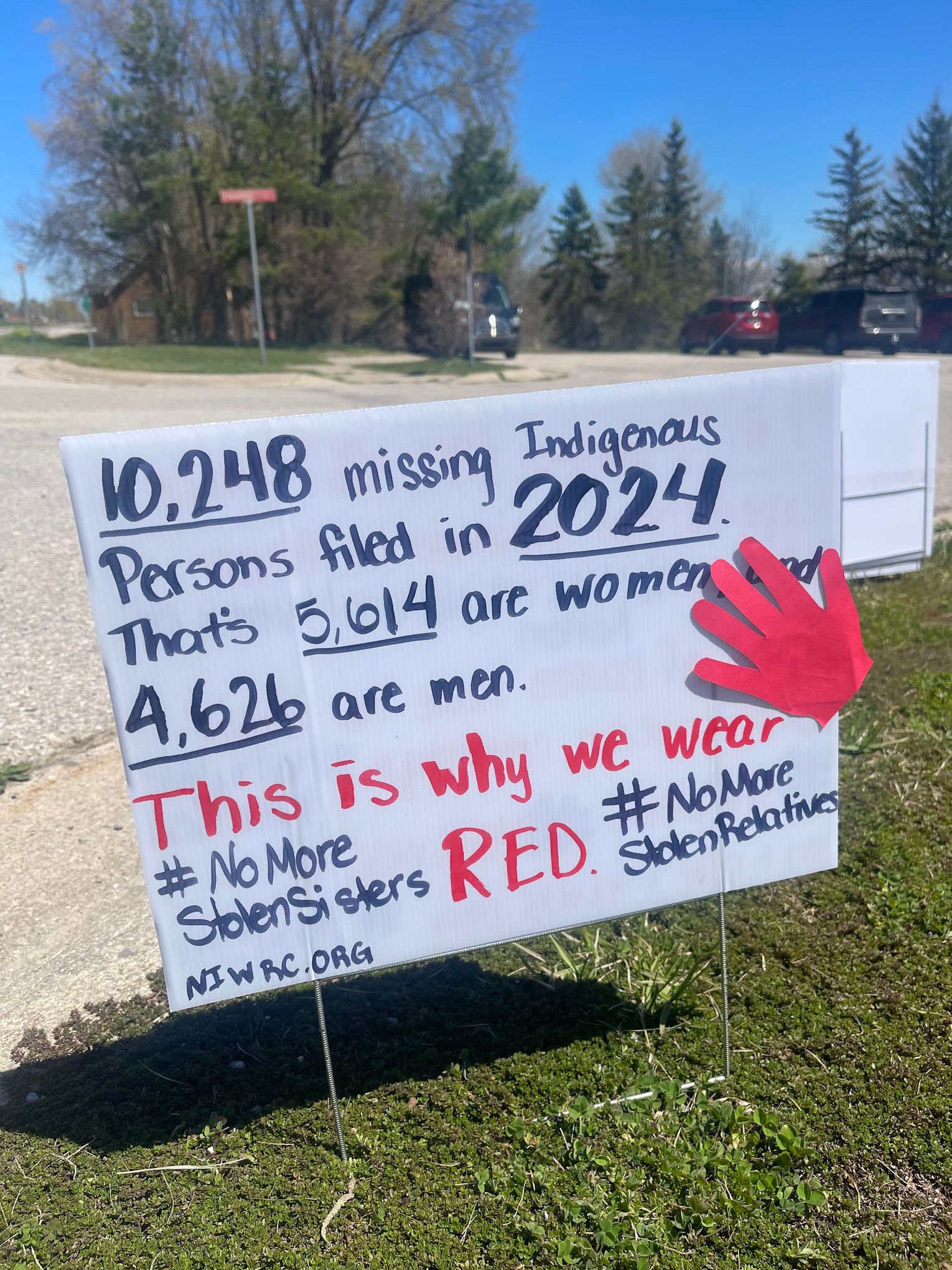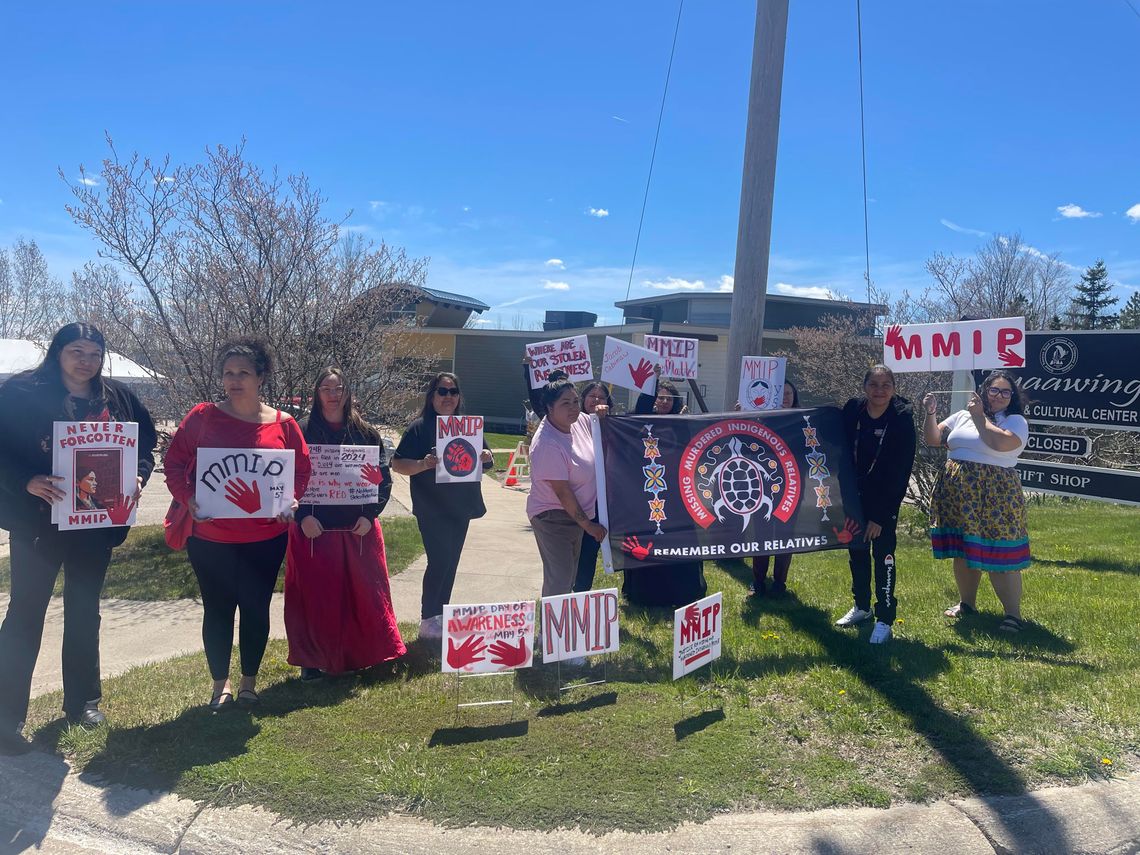
The Grand Traverse Band of Ottawa and Chippewa Indians’ (GTB) held its 5th annual Missing Murdered Indigenous Peoples (MMIP) Day event on Tuesday afternoon.
The event, which was open to the public and intended to remember and raise awareness for MMIP, was held this year at the Eyaawing Museum and Cultural Center in Peshawbestown. May 5th is marked as a National Day of Awareness for MMIP, a national movement that addresses the need to end violence against indigenous people.
According to the U.S. Department of the Interior Indian Affairs, Native American and Alaska Native rates of murder, rape, and violent crime are all higher than the national averages. A 2016 study by the National Institute of Justice has found that more than four in five American Indian and Alaska Native women, 84.3%, have experienced violence in their lifetime, including 56.1% who have experienced sexual violence.
Leilani DeFoe, GTB cultural coordinator, said during the event’s welcome address that there’s a huge need for focused data on the issue across Indian country, and noted the importance of the community gathering to talk and create safe spaces. DeFoe also said the statistics concerning MMIP are pretty concerning given that they are a small demographic within the U.S.
GTB Tribal Chairwoman Sandra Witherspoon spoke briefly after DeFoe and also held a moment of silence to honor those whose lives were taken too soon and for those who are still missing and not home yet. Witherspoon said that the day was not only about remembrance, but about presence and showing up for families that continue to search and grieve and carry unanswered questions.
“It’s about standing beside them and saying you’re not alone,” Witherspoon said. “Each name we carry represents the life, the story, a family. These are not statistics, these are our relatives. And for far too long, their stories were ignored, but our communities did not stay silent. Because of the strength of families, advocates, and tribal nations, the MMIP movement has grown visibly, accountability has grown, bringing visibility, accountability, and action where there was once silence.”
Witherspoon mentioned how in Michigan, they are beginning to see that change through continued advocacy and collaboration, and they now have a statewide MMIP task force, which she said is a step toward better coordination, response, and outcomes for their people. The creation of a task force is not the “finish line” though, she added, and is the beginning of a deeper responsibility.
“Real change requires continued commitment from tribal nations, states, and local partners, from law enforcement and our communities,” she said. “It requires listening to the families, it requires building trust, it requires action that is consistent and not temporary. Today’s gathering reflects that work.”