“America Divided” is a recurring theme used to describe the profound political, social, and economic polarization within the United States. It encompasses deep partisan splits, debates over systemic inequality, and differing perspectives on the country’s founding principles and future direction.
The Enterprise staff often hears claims the all news is bad news. So we decided on America’s 250th celebration to spread good news.
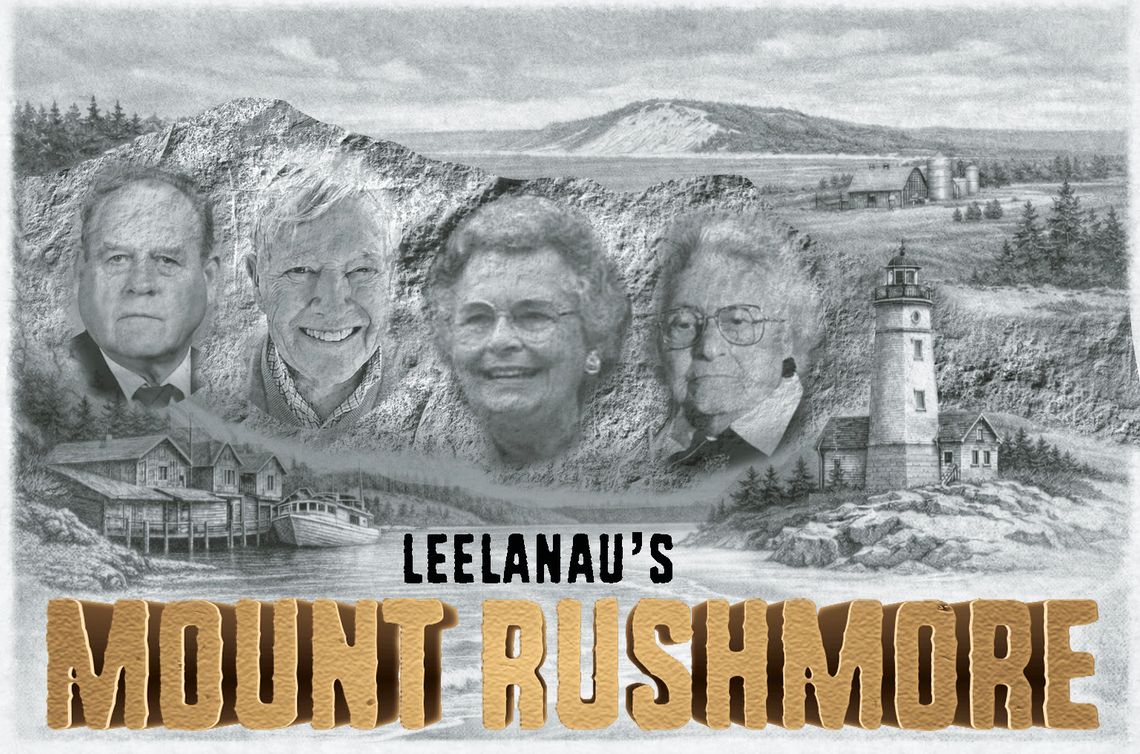
Earlier this year, the Detroit Free Press named their “Mount Rushmore” of Detroit Tiger baseball players. Similarly, the newspaper sought reader input on persons who have made their mark on the county, 50 years post Bicentennial. Our own Mount Rushmore of sorts.
According to the National Park Service, the idea for Mount Rushmore originated by South Dakota State historian Doane Robinson. He imagined large figures of the American west carved in South Dakota’s Black Hills. Robinson contacted master sculptor Gutzon Borglum, who liked the idea, but wanted the sculpture to be a monument
that conveyed the meaning of
America.
Borglum decided upon George Washington, father of our country and first president; Thomas Jefferson, primary author of the Declaration of Independence responsible for the Louisiana Territory; Theodore “Teddy” Roosevelt, 26th president, who provided leadership when America experienced rapids economic growth. Roosevelt was also instrument in negotiating the construction of the Panama Canal, linking the East and West. And don’t forget Abraham Lincoln, 16th president, who held the nation together during its greatest trial, the Civil War.
In May, the Enterprise announced the project and received more than 50 nominations for our Mount Rushmore.
Today, we share the results of the effort, to bring “good news” to the county.
Interestingly, our Mount Rushmore is evenly split between males and females. Let’s begin with ladies first:
• Emelia Christine Schaub (18911995) was the state’s first elected female prosecutor and reportedly, the first woman in the United States to successfully defend a murderer at trial.
She was born in a log cabin in Centerville Township, in 1891 the daughter of Provemont pioneers Simon and Freida Schaub and attended St. Mary School.
Schaub became the first Leelanau County woman to practice law upon her graduation from Detroit College of Law in 1924. Later earning a masters of law degree from the University of Detroit. In 1926, news accounts cited her as the first woman attorney in the nation’s history to successfully defend a murder case.
Schaub was elected to the first of six terms as Leelanau County prosecutor in 1936 to the first of five two-year terms, followed by a sixth term from 1952 to 1954. She was Michigan’s first woman to be elected and to serve as county prosecutor.
While in that office she arranged for the return of Ottawa and Chippewa lands from the state to Leelanau County, creating a de facto reservation. For her efforts, she was made an honorary member of the tribe in 1942. Possession of this land base helped the Grand Traverse Band of Ottawa and Chippewa Indians (Ojibwe) achieve federal recognition in 1980.
Long active in her profession and community, she served as secretary and treasurer of the Women Lawyers Association of Michigan and helped found both the Leelanau Foundation and the Leelanau Historic Society.
She died in April 1995.
• Connie Binsfeld grew up in Munising during the Depression era. She achieved top grades and led her classmates as president of the small student council.
When WWII came, her brothers Bob and Bill, went to fight overseas and sent their pay home so that “Sis” could go away to college at Sienna Heights College. She and husband, John Binsfeld settled in southeast Michigan.
In 1968, troubled times in the Motor City and troubled health of husband John led the family to relocate to their beloved Glen Lake. When the federal government began buying surrounding property to create the Sleeping bear Dunes National Lakeshore, local citizens formed a council to have a voice in the plan. Binsfeld rose to the challenge as their leader, thus entering into her long and celebrated political career.
Recognized and respected for her listening and speaking skills, Connie was elected three times to the Leelanau County Board of Commissioners; four times to the Michigan House of Representatives;; twice to the Michigan Senate and twice to the Office of Lt. Governor. All told, this career spanned 30 years of service. From the humble beginning as the only woman on the local County Commission, she rose to become the only woman in Michigan history to serve in leadership positions of both Legislative Houses and as President of the Senate as Lt. Governor. Connie worked tirelessly in all corners of the state, always taking time to listen to constituents and to help them find solutions to their different problems.
Her crowning achievement was the creation of the “Binsfeld Children’s Commission” during her second term as Lt. Governor. Findings of her commission were incorporated into a package of 20 Bills that she wrote, reforming adoption laws and children’s rights.
• Glen M. Noonan, born and raised in Kasson Township, and left the county to serve a stint in the Merchant Marines during WWII, which took him to places like Russia, Turkey and the Black Sea. After the war he moved west and worked for his uncle’s potato farm in Nebraska; harvested wheat in Kansas, and later worked in Idaho’s sugar beet fields. Glen married Ella Montgomery on Sept. 25, 1948, in Vale, Oregon. Together they settled in Kasson Township to make their home and raised seven children.
Noonan was a life time farmer and conservationist. Of their 1,200 acres, over half is preserved forever through the Leelanau Conservancy after his donation in 2012.
He was a past president of the Michigan Milk Producers Association and also a long time member of the Michigan Farm Bureau; the Michigan Livestock Association; theKassonGrange and served on the Leelanau County Road Commission for 43 years, earning him the title of longest serving commissioner in the state of Michigan.
In his later years donated his land for the Cedar/Maple City Lions Club’s annual Christmas Tree sale with proceeds to benefit the works of the club. He also served as the president of the Old Settlers Picnic Association for over 40 years. Noonan also enjoyed participating and supporting 4 H.
Noonan was the first owner and founder of Glen’s Landfill in Kasson Township. He leaves behind dozens and dozens of descendants , many of whom are active in their communities in Kasson and Empire Township.
“ I don’t believe anyone has done more to shape Leelanau County more than (Noonan),” an entry stated. “He served as road commission, and on numerous organizations.
“He paid for many funeral lunches without anyone even knowing. He was a wonderful neighbor.”
• Ed Collins, who with his wife, Bobbie, founded the Leelanau Conservancy and “preserved the special character of Leelanau County forever.”
The Conservancy was founded 38 years ago by the Collinses, who were inspired to start a land trust after reading an article in Smithsonian Magazine. The founders and early leadership were crucial to shaping the organization’s legacy.
Since 1988, the Conservancy has permanently protected over 18,000 acres and 53 miles of shoreline. Its mission is to conserve the land, water, and scenic character of Leelanau County for future generation.
“Because of their vision and determination, the Leelanau we know and love still looks and feels like home,” Conservancy director Tom Nelson at the time of Collins’ death in 2025. “In the lakes, the farms, the forests — all stand as living proof of their generosity and courage.
“(Collins) Ed had a vision as vast as the landscapes he worked to protect. He believed that if you loved a place deeply enough, you’d find a way to keep it safe — and he did.”