This begins a new series adapted from the book, “A Sleeping Bear Collection,” Volume 2 of the two-part set, “Oral History, Photographs, and Maps from the Sleeping Bear Region,” produced by Tom Van Zoeren in partnership with Sleeping Bear Forever ( formerly Preserve Historic Sleeping Bear):
During the middle decades of the 19th century, the vast virgin forest of northern Michigan began to be stripped from the land — an ecosystem obliterated — and turned into fuel for Great Lakes ships and raw material to build distant cities.
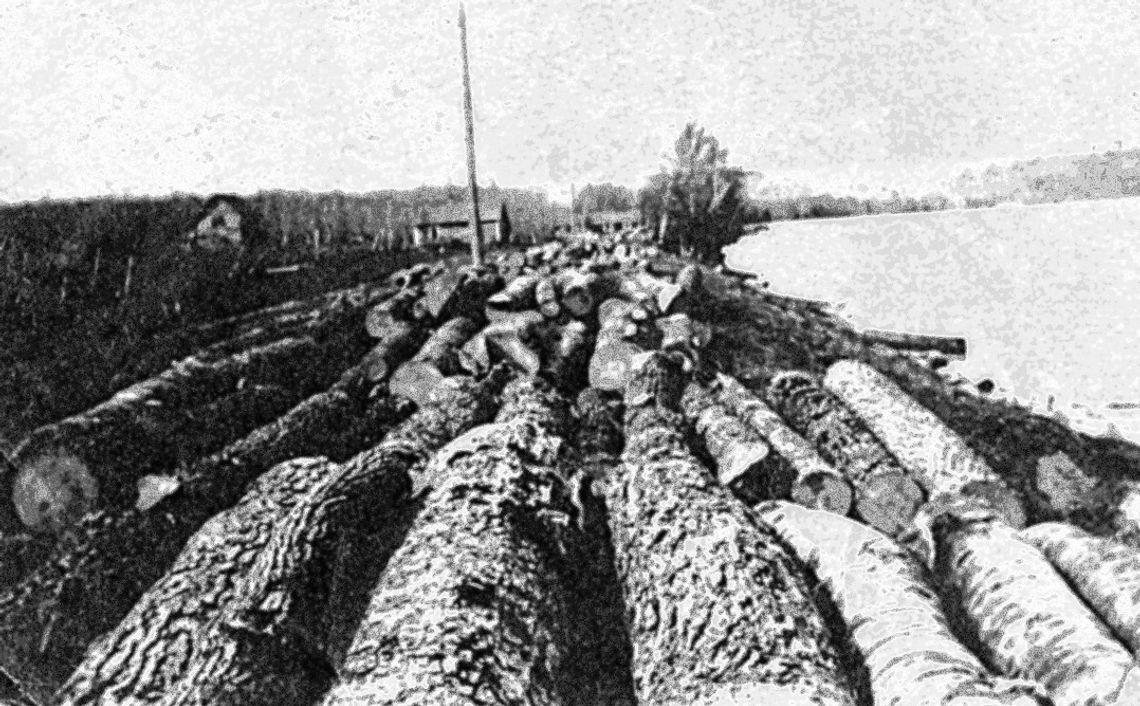
The massive old trees were felled and dismembered during winter using human-powered tools. They then were sledded down the valleys and piled on “banking grounds” along the waterways. In the spring they were rolled into rivers and lakes, and fastened into booms for towing to sawmills.
Following his service in President Lincoln’s Union Army, John Helm, a young man with “a yearning for the quietness of the wild woods,”* came to the Sleeping Bear region of Michigan with a cargo-load of merchandise, built a store, and began business in the wilderness outpost of Burdickville, on the southeast shore of Glen Lake.
“It was never Mr. Helm’s intentions to stay in this country, but one day Miss Nancy (Campbell) came in for some candy, and he became a confirmed believer in the future of this country.”
The young couple eventually married, and stayed to run the store and post office for many decades.
Years later, their daughter Nan Helm wrote about the pioneers of the time: “A channel to be dug through the barrier of land separating Glen Lake from Lake Michigan, with big boats coming in from far away places, and anchoring right in front of Burdickville. This was a dream that sustained them for a good many years.
“They were logging off their land as fast as they could. That wonderful land that was to make them rich when they had conquered it, and had sown it to the money-producing crops it would raise. Surely, it would be the richest of land — land that could produce these tall hardwood trees, whose tops seemed to touch the sky.
“Frantically, they slashed at the beautiful virgin timber — maple, pine, oak, etc., hacking it down, selling it when they could, for a mere pittance to the lumber barons, who sat quietly waiting in their offices, as the terrific clearing of the land went on. When they couldn’t sell it fast enough, they burned it — anything to get rid of it. In the summer each homestead would be wrapped in a blue haze that came from the burning giants of the forest.
“. . . The hauling of the logs was a hazardous thing. They would start out by lantern light, before daylight. They would come swooping down the valley road, and the Fritz road, with its many twists and turns, their horses running madly with the high load of logs always on their heels.
“The young pioneer would stand on the very top of the icy, slippery logs, legs astraddle, reins and whip in hand, alternately cajoling and cussing the animals. One bit of miscalculation in balancing, and they would plunge to their death . . .”
* From Nancy Helm’s obituary, 1940