As the weather goes, so goes visitation at Sleeping Bear Dunes National Lakeshore.
Visitation for the month of June was 243,648, bringing the year-to-date total to 394,936, 11.4 % down from the same period in 2025.
Total visitation at Sleeping Bear last year was 1.6 million, maintaining its status as one of the most visited national lakeshore in the country.
This included about 135,600 overnight stays, with crowds peaking sharply during the summer months.
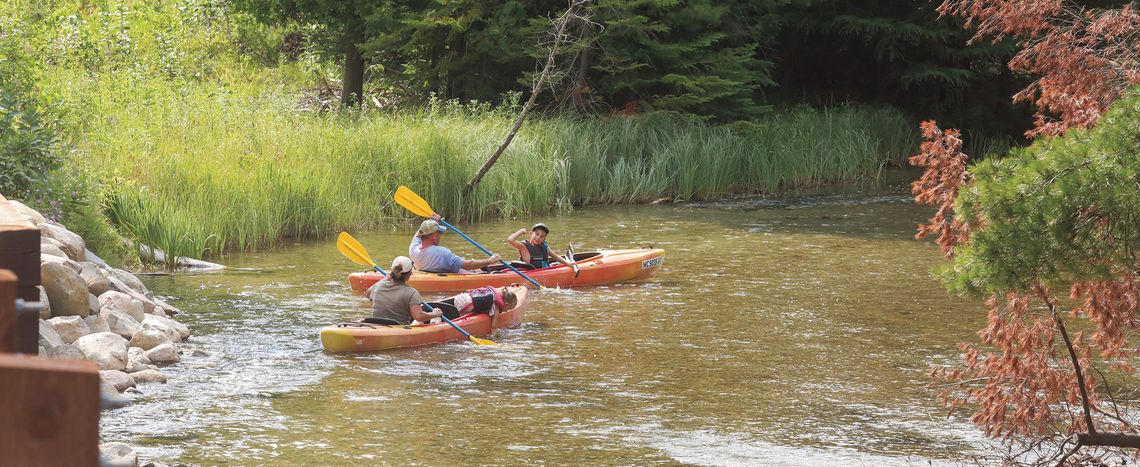
“The end of July and the first two weeks of August are our busiest time,” said Katy Wiesen, of Crystal River Outfitters in Glen Arbor. The business is focused on kayak and bicycle rentals.
Visitation at the lakeshore is heavily concentrated, with about 71% of the year’s visitors arriving in June, July, and August. July is by far the busiest month, seeing up to 3.6 times the average monthly attendance.
However, use of the Sleeping Bear Heritage Trail has bolstered visitation numbers in the winter months. The 22-mile, multi-use, non-motorized path connecting Empire to Bohemian Road is popular with cross country skiers and snowshoers.
In January, Park visitation was 16,267. February followed with 23,300. In March, when many people head for warmer climates, visitation bottomed out at 15,329.
But, with the arrival of spring, numbers rebounded to 24,650 in April and nearly tripled in May at 71,742.
All these people enjoying Sleeping Bear contributes greatly to the local economy. Despite federal budget constraints, Sleeping Bear remains a key economic driver for Leelanau County and the Grand Traverse region.
“Obviously, we’re located in the center of the park,” Wiesen said. “(The Park) is a huge draw. “People stay here and are finding all sorts of things to do … Kayaking, biking and shopping.”
According to a recent National Park Service Visitor Spending Effects report, guests spent an estimated $197 million in local gateway regions while visiting the National Lakeshore in 2023. That’s money in the coffers of lodging, food and retail businesses. Tourism, in general, attracted $254 million in economies surrounding Sleeping Bear, generating more than 400,000 jobs.
“I’d say the National Lakeshore is one of the number one draws in our county,” said Mary Lingaur, owner of Pedaling Beans in Lake Leelanau. “We just had a whole family come in the other day. A lot of times they’ll ask us what there is to do around here, and we’ve got free maps and all that good stuff to hand out. We recommend people go to the Dune Climb and the Lakeshore.”
According to the National Park Service, the 1.6 million visitors annually inject nearly $200 million into the local economy.
“We’ve had a good year,” Wiesen said, adding the smoke originating in Canada and Upper Midwest slowed activity. “All in all we’ve had a great summer. Traffic remains steady.… There’s a lot of summer left.”
The greater Grand Traverse Area, including Leelanau, Grand Traverse and Benzie counties realize a massive $1.4 billion annual economic impact from tourism, acting as the bedrock for local small businesses, restaurants and wineries.
But how much is too much?
A new national study by Cherry Data Signals, has revealed the U.S. tourist destinations where residents feel the greatest stress when peak-season visitors arrive. And three Michigan destinations appear in the ranking.
Mackinac Island came in at No. 26. Saugatuck ranked No. 114, and Traverse City ranked No. 121 among the tourist destinations where residents reported feeling the strain of visitor traffic, crowds, noise, parking pressure, and disruption to everyday life.
“Sleeping Bear Dunes access and a downtown that draws visitors across seasons,” the survey stated.
“Traverse City carries the weight of being northern Michigan’s unofficial capital of leisure: beaches, wineries, breweries, festivals, lake weekends, and Sleeping Bear Dunes which draws visitors all year long,” the survey results said. As a bedroom community of Traverse City, the impact of tourist crosses county lines.