
Joseph C. Raphael
Joseph C. Raphael
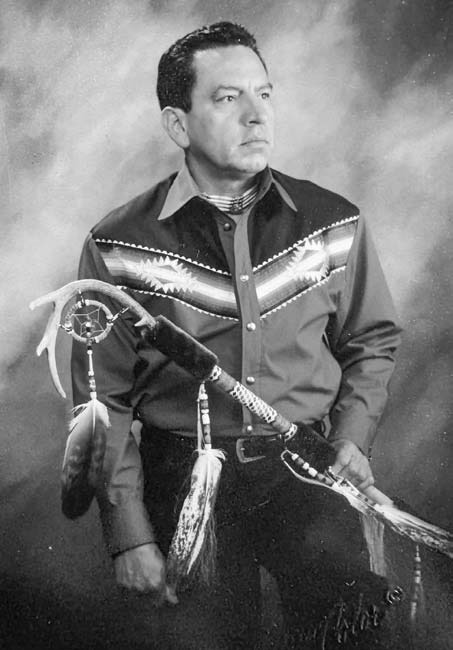
Joseph C. Raphael, “Buddy,” age 84, passed away peacefully on September 5, 2026, at his home in Peshawbestown, Michigan, along the beautiful shoreline of Lake Michigan. He was comforted in his final moments by his devoted wife of 65 years, Judy Raphael.
Buddy’s final hospice year at his home was a testament to the immense love and respect he commanded throughout his life. He spent his remaining days surrounded by the warmth of his extended family and community. He was blessed with visits from all his children, grandchildren, and great-grandchildren. His home was filled with stories, laughter, and affection from his nieces, nephews, grandnieces, grandnephews, and generations of extended cousins. He was also visited by countless lifelong companions and recent friends, all of whom came to share their love and gratitude. His grandson, Dakota Funmaker, and granddaughter, Olivia Mulham, both provided enormous livein support for Buddy and Judy during the difficult final years of his illness.
He leaves behind a rich legacy of family unity, enduring friendship, and a life beautifully lived amidst the continuing necessity to remain Indian in the face of mainstream social demands to destroy Indianness, both explicit and implicit.
Born in Peshawbestown, Michigan, on April 2, 1942, Buddy’s maternal grandparents, Joe and Rose Raphael, raised him as their son; thus, he was and is an uncle to generations of the family. His biological parents were Henry Bailey and Izada Raphael. Buddy was also many things to many different people: husband, father, grandfather, Indian school refugee, army veteran — he enlisted in the U.S. Army and was honorably discharged at Fort Sill, Oklahoma. He then owned a tavern in Lawton, Oklahoma that served the Kiowa, and Comanche. Returning to Michigan in the early 1960s, he worked as a fruit picker, a factory worker, and an Indian crafts trader, advocating for the free-trade provisions of the Jay Treaty despite facing arrest and the seizure of his trade goods. He was always very entrepreneurial and a very hard worker.
The historical reality he was born into and lived captured the structural injustice of the treatment of Indians by the United States and the State of Michigan, specifically reflecting the injustice experienced by the Anishinaabek of the Grand Traverse Band of Ottawa and Chippewa Indians. The shift from the 1836 Treaty of Washington (which ceded millions of acres to pave the way for Michigan statehood and threatened the removal of Grand Traverse Bay Indians to the “west” (within five years) to the 1855 Treaty of Detroit was a deliberate federal shift from forced removal of Indians to forced assimilation of Indians via land allotment and permitted settler fraud. The Treaty promised 80-acre allotments for adults and 40-acre allotments for children, which was designed to dissolve tribal communal land ownership and integrate Native individuals into the settler agricultural economy.
However, as seen in Buddy’s family history, this system systematically stripped wealth from the Indian community. By the 1890s, an overwhelming majority of the Grand Traverse Band citizens were left virtually landless. Land was stripped through aggressive tax levies (such as an arguably illegal tax levy on the farm of Daniel Chippewa and Christine Paypawnesay, his great-grandparents), fraudulent real estate schemes, tax foreclosures, unapproved sales targeting Indian individuals unfamiliar with American property law, and the lack of federal trust status for Indian land. Buddy’s lineage directly connects the localized pain of displacement to the broader bureaucratic framework of the Bureau of Indian Affairs (BIA) that actively fostered dispossession: The loss of the Chippewa/Paypawnesay farm forced a migration to Peshawbestown, which persisted for decades as a tiny, impoverished, and unrecognized refuge for displaced Indians, --sort of a County reservation, thanks in part to the kindness and advocacy of Emelia Schaub as the County prosecuting attorney. From the 1930s to the late 1970s, community members fought for federal recognition and achieved recognition in 1980.
The Legacy of “Gagagashe” —the original family name for Raphael and so many other tribal members, either by descent or intermarriage, including Chippewa, Ance, Mashka, Paul, Harter, Broom, and Petoskey—is not just a personal identifier. That name and those descendant names serve as a living title chain of Indian survival, directly traceable through five generations back to the 1855 federal allotment records and BIA census tracts. This history demonstrates how historical Indian land theft remains an active, shaping force in the family trees, legal battles, and realities of the community today. Buddy’s life and work efforts were a response to this dispossession.
Historical trauma is a real thing. But it takes an enormous, continuous effort to change the trauma; Buddy and Judy had that drive both as foster parents to countless displaced Indian children and in the larger issue of attempting to change systemic causes of the trauma and displacement. His heartfelt effort for children is evident in any picture you see of him with children… a big smile on his face.
Buddy was active in the Grand Rapids Indian community, where he relaunched native Pow-Wows (Jiingtamok) and became an Indian rights activist. He provided support for the Wounded Knee Occupation in 1973—his wife Judy was born on the Rosebud Sioux Reservation and thus knew the alternative routes to avoid U.S. blockades of Wounded Knee.
As a community developer for urban Indians in the 1970s, he supported Indian fishing rights on the Great Lakes. He, along with other GTB members, pushed for the reestablishment of the Grand Traverse Band as a federally recognized Indian Tribe. He then served as its long-time Tribal Chairman, working to reestablish the Grand Traverse Band as a functioning Tribal Government while opposing federal and state attempts to limit tribal sovereignty. He served as Chairman from 1980-1996 and later as one of seven elected Councilors for an additional sixteen years. On occasion, when arguing his point, he could have the personality of a bristling porcupine with all quills up. Yet his points showed a depth of legal reasoning that surprised and amazed tribal attorneys. He was one of the original advocates for Indian gaming for Michigan Tribes, establishing the Leelanau Sands Casino in 1983 and introducing slot machines in the 1980s despite threats of individual prosecution from the U.S. Attorney. His commitment to the Tribe was evident in the numerous personal legal risks he took to advance it. His commitment to family, community, and tribe required nothing less, and it was grounded in deep compassion for all; he genuinely cared for and loved people.
He leaves behind his wife, his lifelong partner, Judy Raphael, 80; his son, Clive, 65, and his wife, Linda, and their children and grandchildren; (Crystallyn Larrison, Joseph A. Raphael, Jordan and Luke Larrison, Niiganii and Marcelo Raphael); his daughter, Monica, 62, and her children and grandchildren; (Alexa Rae and James “Bud” Day, Marshall Funmaker, Dakota Funmaker, Aydrian James Day, Mika Rose Funmaker and Marshall Garrett Funmaker Jr.) his daughter, Marcia, 61, her husband Chris and her children and grandchildren; (Max, Jesse, Will, and Olivia, Buddy and Winona Mulham) his sisters, Phyllis Bailey, Cindy Bailey, his brothers, Hank Bailey, Randy Bailey, and Scott Bailey along with his Anishinaabe brother George Martin.
He was preceded in death by his father, Henry Bailey; his mother, Betty Bailey; his mother, Izada Mae Raphael, his sisters, June and Pauline Bailey; an infant granddaughter Cassandra Mae Raphael; his father (nee Grandfather), Joseph Raphael; his mother (nee Grandmother), Rose Chippewa; his brothers, Howard Raphael and his wife, Elsie (nee Robinson); Carl Raphael and his wife, Julia (nee Mashka); and Clifford Joseph Raphael; and his sisters, Dorothy Rose (nee Raphael) Petoskey, Delia Raphael, and Florence Raphael.
We apologize to any family members not listed by name or for other relatives not listed; the omissions are not intentional. The number of relatives is enormous, and the family of Joseph C. Raphael “Buddy” extends best wishes as well as sincere thanks to all during this time of loss. The Gagagashe family name, an Indian legacy, lives on in its many descendants, who will continue the fight and remain Anishinaabek.
BAAMAAPII The funeral service was held on Tuesday, September 8 at the Strongheart Center of Peshawbestown. Mr. Paul Raphael officiated.
Please share condolences with the Raphael family at www.martinson.info Arrangements are with the Martinson Funeral Home and Cremation Services of Leelanau.