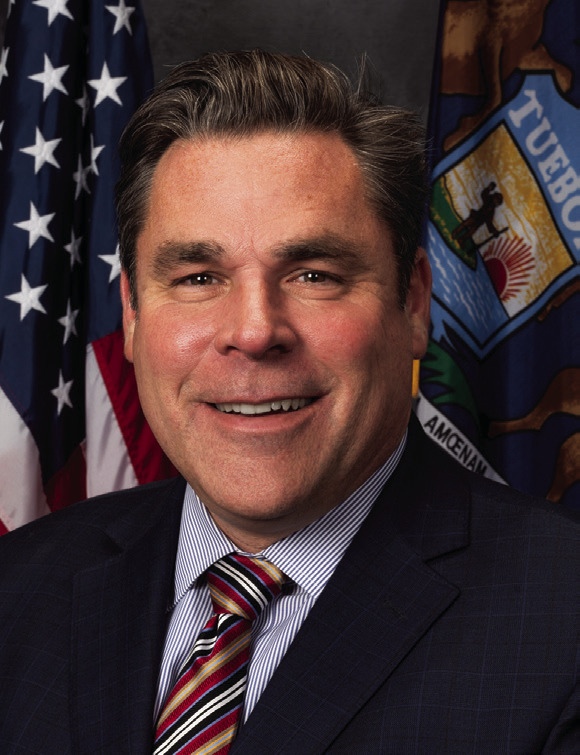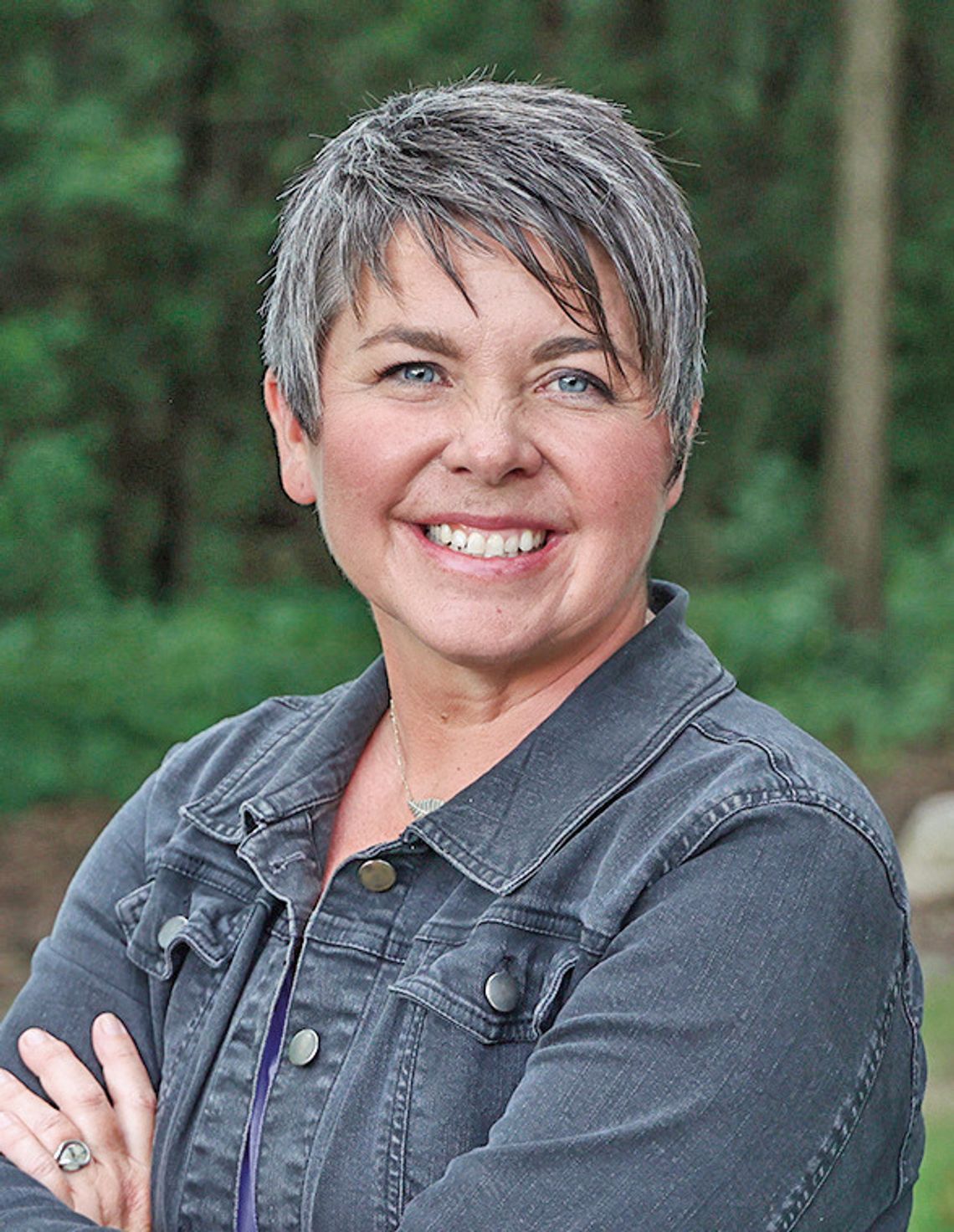
Coffia, a former Grand Traverse County commissioner, flipped the newly-drawn district in 2022 by unseating Republican Rep. Jack O’Malley, then survived an expensive 2024 rematch in a seat spanning Grand Traverse, Benzie and Leelanau counties that has become one of the state’s premier swing districts.
At a recent Cherry Pie Debate, the fault lines between Coffia and Republican challenger Edwin B. Dean — a Northport village council member and small business owner — came into sharp relief on energy and infrastructure. Coffia blasted the Line 5 pipeline as socialized profit and public risk at last month’s Cherry Pie Debate, noting that all 12 federally recognized tribes in Michigan oppose both the pipeline and the tunnel proposed to house it.
Dean, meanwhile, honed in on the region’s crumbling infrastructure, noting Michigan’s poor road grade and arguing the state needs a far more serious approach to maintenance and emergency road failures. He also emphasized emergency response readiness in the largely rural district.
Coffia has proven durable but never dominant. Her 2022 upset of O’Malley was a razor-thin 765vote squeaker — 49.8% to 48.5% with a Libertarian siphoning 1.7% — and her 2024 reelection over Lisa Trombley was a closer-thanit- looked 2.1% to 47.9% win, roughly 2,700 votes out of more than 64,000 cast. In a district that tight, turnout in an open governor’s race year could decide which way the seat breaks.
The stakes run beyond the district: Republicans hold a 58-52 House edge, all 110 seats are up, and Democrats need a net gain of four to flip the chamber.
One of the Michigan Senate’s most geographically sweeping districts is on the ballot Nov. 3, where first-term Republican Sen. John Damoose of Harbor Springs faces Democrat Kate Gallup of Cedar in a race shaped by housing, healthcare and Line 5.
The 37th stretches across Grand Traverse, Leelanau, Antrim, Charlevoix, Emmet and Cheboygan counties and reaches into the eastern upper peninsula, taking in the Straits of Mackinac. Damoose, 54, won the seat in 2022 with 55% of the vote after two years in the state House.
Gallup, 40, a Traverse City native and former federal patent examiner, now teaches in Leelanau County and helps run her family’s gallery. She attended the Leelanau School in her youth.
At the Cherry Pie Debate, the two clashed most vividly on housing. Gallup, a self-described millennial struggling with housing costs herself, called for increasing supply alongside stronger tenant protections, converting some short-term rentals to year-round housing and directing rental revenue toward infrastructure. Damoose pointed to his record, including $5 million he secured for a Traverse City-area educator housing project spanning multiple school systems, and said shortterm rentals and vacant homes belong in the conversation. He favored local control, while Gallup argued the state should step in when problems cross township lines.
They split similarly on Line 5 — Damoose backs the tunnel, arguing the lakes are safer with the pipeline enclosed, and stressed the U.P.’s reliance on its energy — and on healthcare, where Gallup supports MiCare and nurse protections. At the same time, Damoose favors narrower fixes like lowering prescription drug costs.
Damoose holds a more than 3-to-1 fundraising edge against Gallup heading into Tuesday.
Democrats cling to a 20-18 Senate majority rated a toss-up this cycle.
Damoose’s 55% victory in 2022 suggests a comfortable Republican baseline. Still, the district’s geography, plus a midterm electorate in a year when the Senate majority is rated a toss-up, leaves little room for either side to take the seat for granted.